
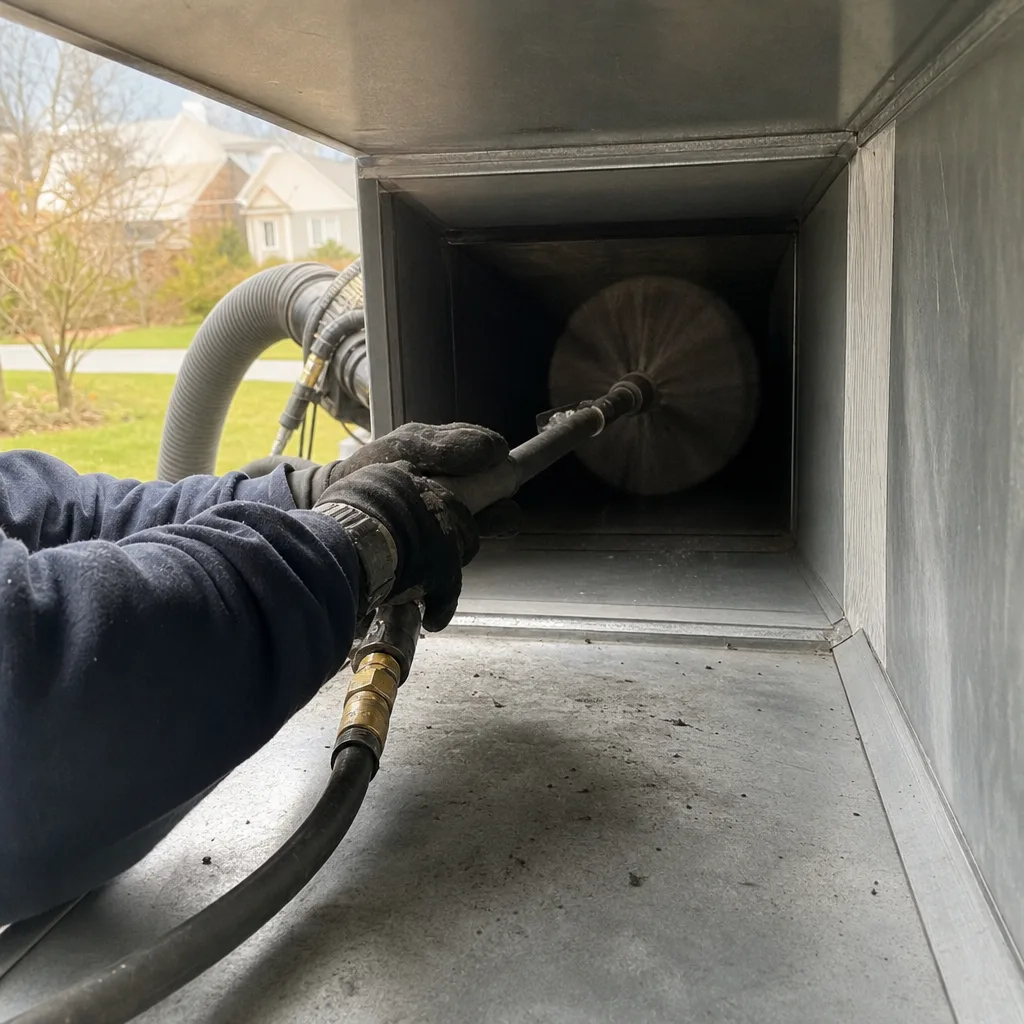
Last updated November 15, 2026
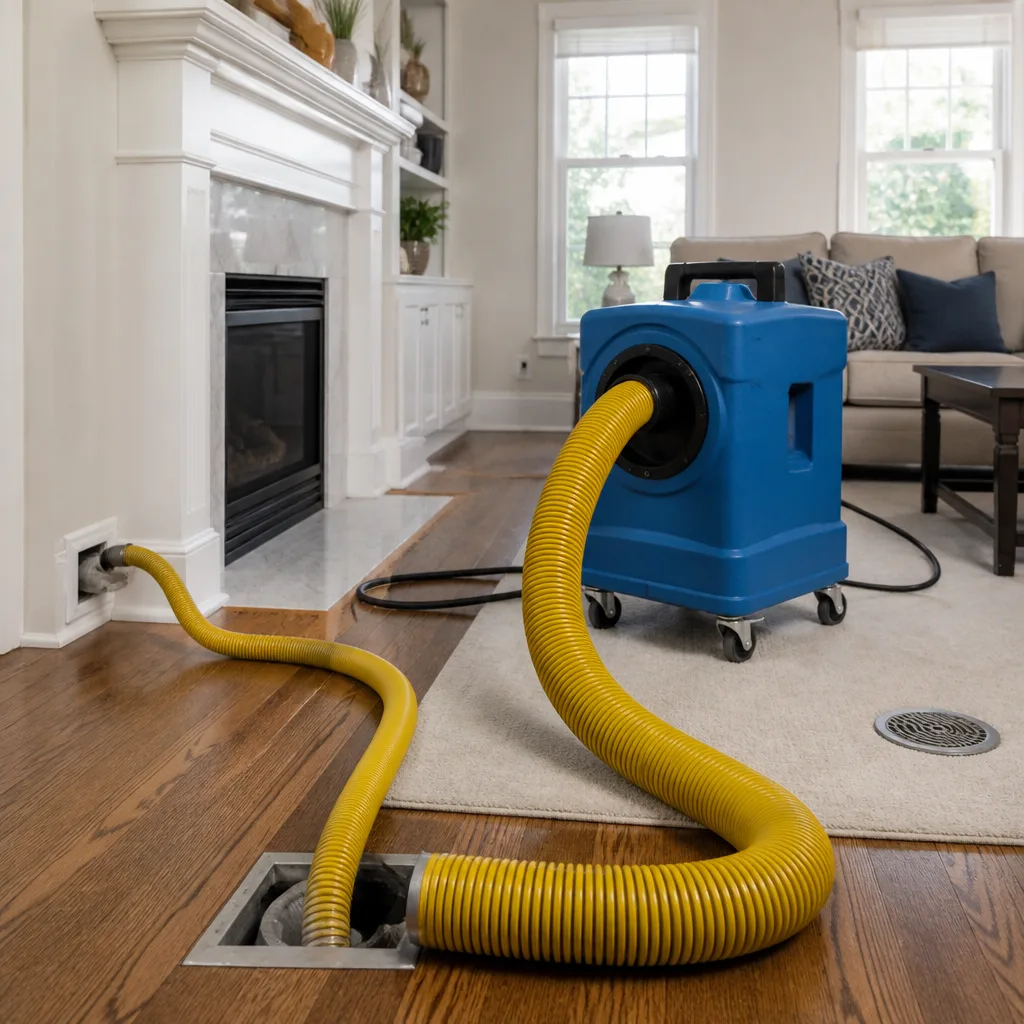 Whole-home duct cleaning
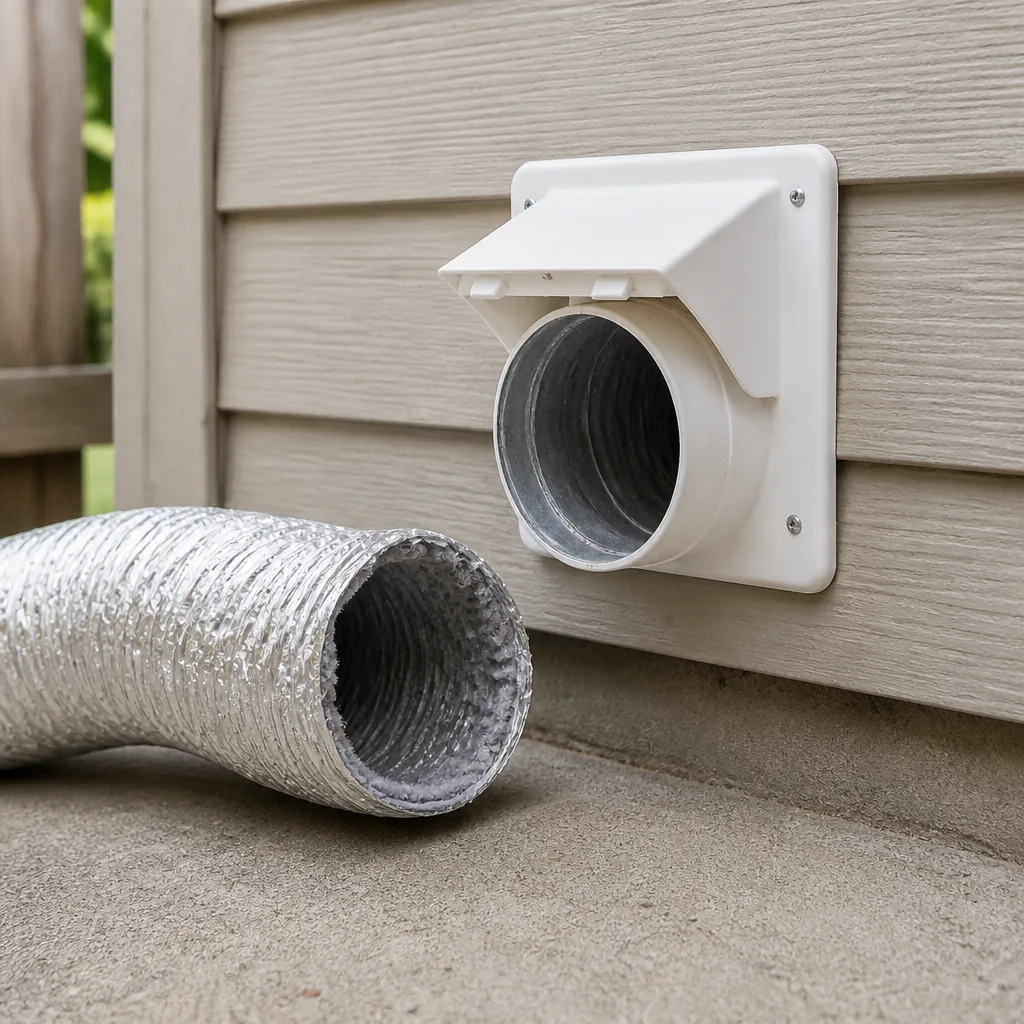 Dryer vent cleaning
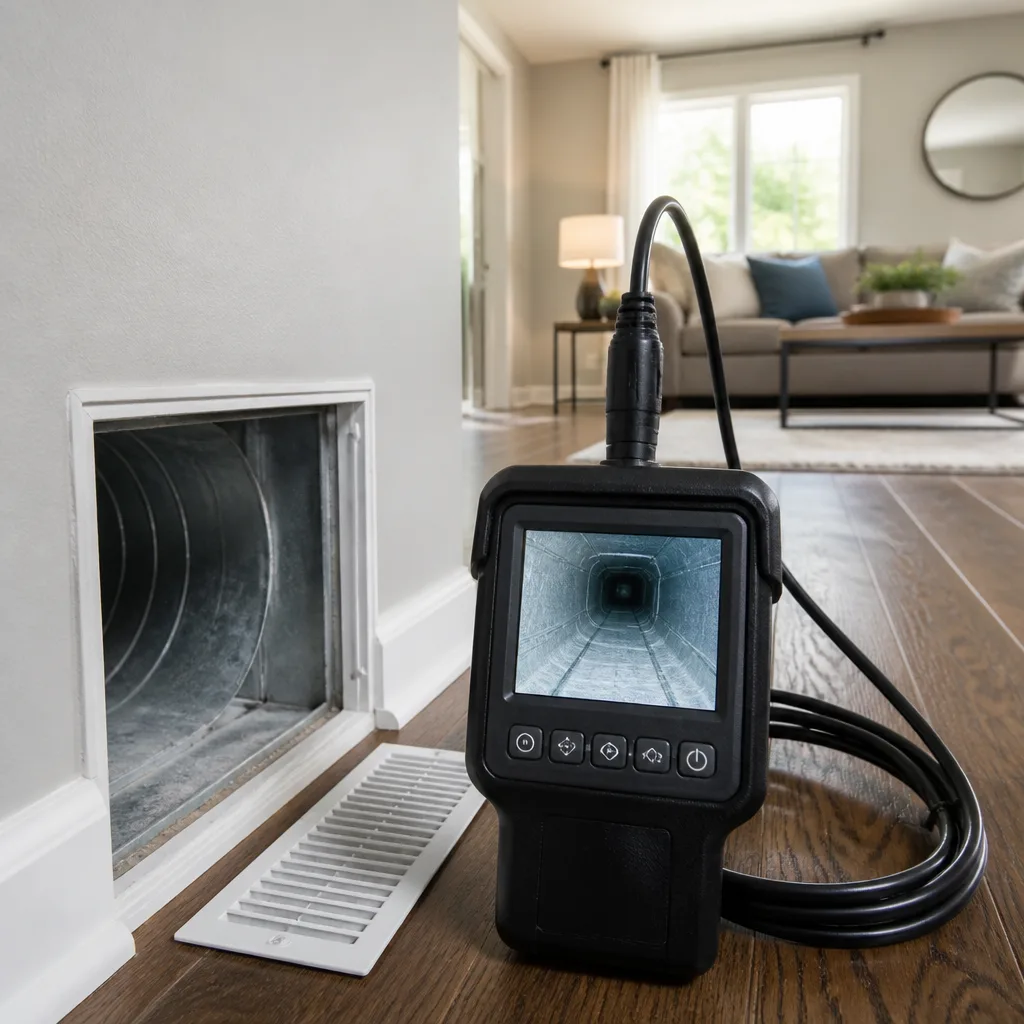 Camera inspection
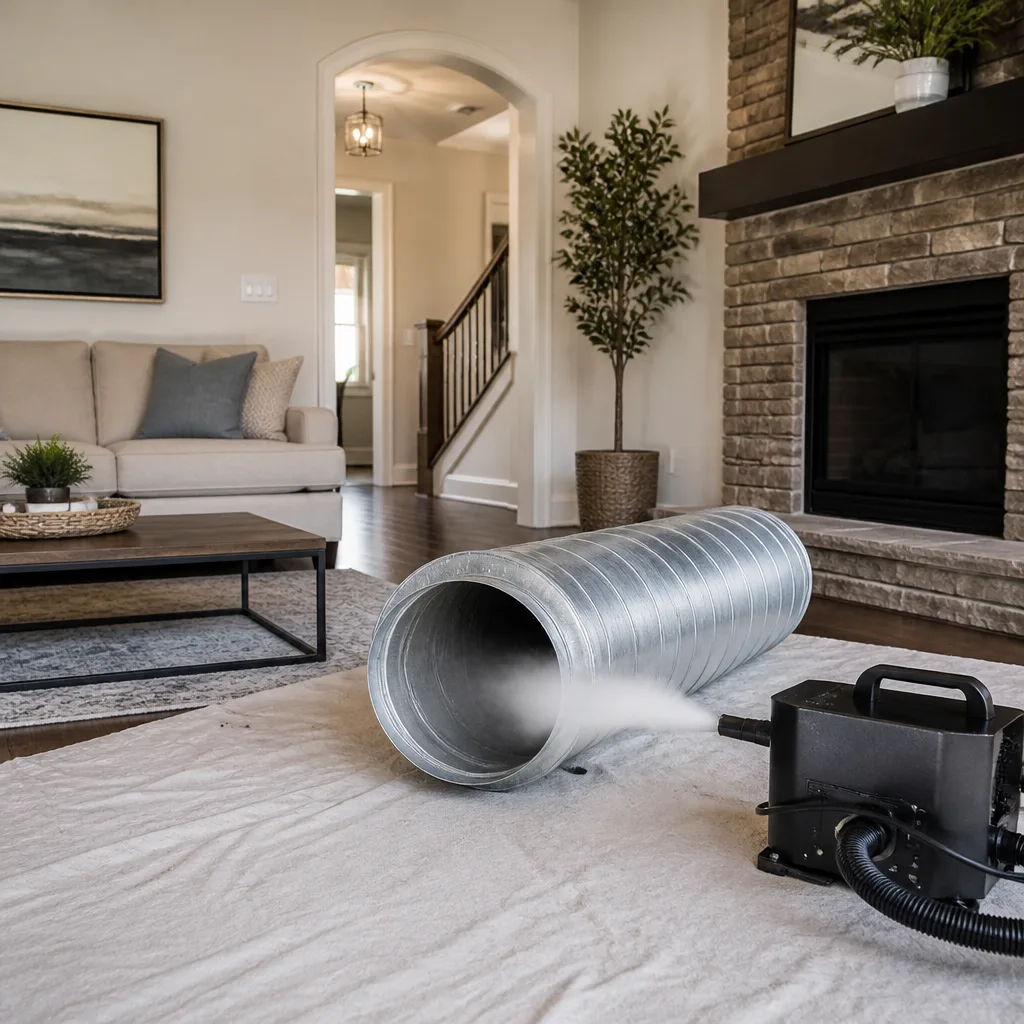 Sanitizing & deodorizing
Whole-system duct and dryer vent check with before-and-after photos - you see exactly what came out of your vents
That "$99 whole-house special" is a bait ad - the real number appears once they are in your hallway, or the "clean" is a shop-vac at the register. We photograph the inside of your ducts before and after instead.
Air Duct Cleaning Troubleshooting in New Bedford: Common Problems and How to Fix Them
If your house is still dusty two weeks after a professional duct cleaning, the most likely culprit isn’t your ducts. It’s the vacuum the technician brought with them. That sounds backwards, so it’s worth sitting with for a second. Most of what homeowners describe as “my ducts need cleaning again” is really a description of a cleaning that never fully happened, because the equipment on site couldn’t move enough air to pull debris out of the system. This guide teaches you how to tell the difference between a dirty duct system and a failed cleaning job, how to diagnose weak airflow, lingering odors, and rattling registers, and when the real answer is repair rather than another cleaning. You’ll learn what to check yourself, what to ask a technician, and how to verify the work in New Bedford before anyone packs up and leaves.
Quick Answer
Persistent dust, weak airflow, or musty odors after a duct cleaning usually point to one of three things: an incomplete cleaning that didn’t use proper negative pressure, a duct problem (collapsed flex, stuck damper, disconnected joint) that cleaning was never going to fix, or microbial growth on the evaporator coil or drain pan rather than in the ducts themselves. Before you book another cleaning, verify what equipment was used, inspect accessible duct runs with a flashlight and phone camera, and ask whether anyone checked the coil and the airflow path. A duct system is only as clean as the process behind it.
Styles & brands we work with
- Whole-home duct cleaning
- Dryer vent cleaning
- Camera inspection
- Sanitizing & deodorizing
Table of Contents
- How Do You Tell a Dirty Duct System From a Failed Cleaning Job?
- What Do CFM Ratings Actually Mean for Duct Cleaning Equipment?
- Why Is My Airflow Still Weak After Cleaning?
- Why Does My House Still Smell Musty After Duct Cleaning?
- How Do You Verify the Work Before the Technician Leaves?
- Which Symptoms Mean You Need Duct Repair Instead of Cleaning?
- What About the Dryer Vent?
- What Does Duct Cleaning Cost in New Bedford?
How Do You Tell a Dirty Duct System From a Failed Cleaning Job?
The quickest test is timing. A genuinely dirty system built up over years, and a properly cleaned system should stay noticeably better for a long stretch. If you’re seeing the same dust film return within a few weeks, the ducts weren’t the whole problem, or they weren’t fully cleaned. Those are two different diagnoses with two different fixes.
Here’s how we walk homeowners through the distinction. It comes down to what the technician actually did versus what the equipment was capable of doing.
- Signs it’s a true dirty-system problem: visible dust accumulation that took years to build, a musty smell that appears only when the system runs, heavy dust at the supply registers, and no recent cleaning on record. A proper cleaning addresses this.
- Signs it’s a failed cleaning job: dust returns fast, registers still have visible debris after the service, no before-and-after photos were offered, the technician used a shop-style vacuum or a single hose without a negative-pressure setup, and the whole job took under an hour for a whole house.
- Signs it’s neither, and you need repair: weak airflow in specific rooms only, rattling or whistling at certain registers, temperature differences between rooms, or soot-like streaking around a register. Cleaning can’t fix a physical duct problem.
Real duct cleaning uses a mechanical agitation tool to loosen debris along the duct walls while a high-powered negative-pressure vacuum holds the system under suction so nothing escapes into your living space. That combination of agitation plus containment is the whole ballgame. Without proper negative pressure, a technician is essentially stirring up dust and hoping the return catches some of it. In our experience across New Bedford homes, that’s the single most common reason a homeowner calls us a second time after a disappointing first job.
What Do CFM Ratings Actually Mean for Duct Cleaning Equipment?
CFM stands for cubic feet per minute, and on duct cleaning equipment it’s a measure of how much air the vacuum can move. That matters because suction strength isn’t just about whether the hose sticks to your hand. It’s about whether the vacuum can hold an entire duct system under negative pressure while a technician works a rotating brush through the runs, dislodging debris from the walls.
A weak vacuum can’t sustain negative pressure across a whole house. Air takes the path of least resistance, so suction drops the farther you get from the machine and the more branch runs the system has. In a New Bedford triple-decker converted to single-family use, or an older colonial with a long, branching trunk-and-branch layout, that distance adds up fast. A machine that reads impressive at the truck can still be delivering almost nothing at the far end of a second-floor run.
What to ask about the equipment
- What brand and model is the vacuum? Professional setups use contractor-grade systems. We deploy Rotobrush and Nikro rigs, which are the same class of equipment remediation contractors use, not consumer vacuums dressed up as duct cleaners.
- Is it a negative-pressure system? A true setup seals the system at the main trunk and pulls a vacuum, so dust leaves through the hose rather than drifting into the room.
- What’s the agitation tool? Rotary brushes and air whips are standard. A hose alone, without agitation, won’t scrub debris off the duct walls.
- What about containment? For homes with allergies or elevated contamination concerns, containment equipment matters. We keep Abatement Technologies gear on hand for exactly those scenarios, so debris and contaminants are controlled rather than redistributed.
You don’t need to become an equipment expert to hire well. But asking these four questions will filter out most of the low-bid crews in a hurry.
Why Is My Airflow Still Weak After Cleaning?
Cleaning removes debris. It doesn’t fix a collapsed flex duct, a stuck damper, a disconnected joint, or an undersized return. If one room is weak while the rest of the house is fine, the cleaning was never going to fix it, and no amount of repeat cleaning will.
Airflow problems fall into a few predictable buckets. Here’s how to sort them out:
- Weak in one room only. Most often a collapsed or kinked flex duct segment, a supply register that’s been closed or blocked by furniture, or a branch damper that’s been partly shut. If the room has always been weak, suspect the duct run. If it went weak suddenly, suspect a damper that shifted or a duct section that came apart.
- Weak throughout the whole house. Likely a filter that’s clogged, a blower motor issue, a failing blower capacitor, or a return system that’s undersized for the home. Duct cleaning won’t touch any of these. A clogged filter is the easiest thing to rule out yourself before calling anyone.
- Good airflow but poor cooling or heating. That’s a refrigerant, thermostat, or equipment issue, not a duct issue. Worth ruling out separately from the duct work.
- Weak airflow that improves after cleaning but comes back. That’s a sign of a leak or disconnect pulling in unconditioned air, or of debris being reintroduced from a section that wasn’t cleaned. Duct sealing or repair is the fix, not repeat cleaning.
We clean it, and if it’s broken, we fix it. That’s why we offer air duct repair alongside cleaning. Plenty of duct cleaning companies walk past a disconnected flex run, clean around it, and hand you an invoice. A collapsed run has no business being called “cleaned” once the technician knows it exists. If you’ve had a cleaning and your New Bedford home still has a room that never gets comfortable, ask whether anyone inspected the runs rather than just vacuumed them.
Why Does My House Still Smell Musty After Duct Cleaning?
Persistent musty odor after a cleaning almost always traces to something outside the duct runs: microbial growth on the evaporator coil, standing water in the drain pan, or a wet filter housing. The ducts were the messenger, not the message.
The evaporator coil sits in the air handler and stays damp during the cooling season. Dust, pollen, and organic debris collect there, and in a humid stretch of weather it can grow. New Bedford summers bring enough humidity that a coil that’s never been cleaned is a common source of the “it still smells” complaint. The ducts can be spotless and the house will still smell musty if the coil and drain pan are the actual culprits.
Here’s what that means practically:
- Ask whether the coil was inspected. A cleaning that never looked at the air handler misses this entirely. We can point you toward reputable coil and air-handler service since it falls outside duct cleaning itself, but we’ll tell you when that’s the right next step.
- Check the drain pan yourself. If you can safely open the air handler panel, look for standing water or a slimy film. If you can’t access it safely, don’t force it. Ask a technician to check.
- Replace the filter. A damp or severely loaded filter can carry odor. This is a simple homeowner fix and worth doing before you assume the ducts are the problem.
- Ask about air quality products. If your home has recurring humidity or allergen issues, we install Honeywell and Aprilaire components that address air quality at the system level rather than just inside the ducts.
One more thing: a musty smell shouldn’t be treated as a cosmetic problem. If it’s coming from a damp coil or pan, it’s worth addressing quickly, because sustained moisture is the condition microbial growth needs. A trained technician can confirm what’s actually going on.
How Do You Verify the Work Before the Technician Leaves?
You can check a lot with a phone camera and a flashlight, and any reputable duct cleaning company should be comfortable with you doing it. Do this while the technician is still on site, not after they’ve packed up.
- Pop off a supply register. Look into the duct with a flashlight and take a photo with your phone. The interior walls should look clean, with no heavy dust film or debris in the corners.
- Check the return. The return register is often the dirtiest part of a system. Photograph it before and after so you have a comparison.
- Look at the branch run, not just the trunk. Ask the technician to show you a branch. A cleaning that only hit the main trunk leaves the branch runs untouched, and the branch runs are where dust comes back from first.
- Ask for before-and-after photos. A company confident in its work will happily show you its own photos. If you get a vague answer, that’s information too.
- Ask what the negative-pressure setup was. If they can explain where the vacuum was connected and why, that’s a good sign. If they can’t, you know the answer.
One caveat on self-inspection: only remove registers you can reach safely. Don’t climb ladders, open electrical panels, or stand on furniture. If getting to a register feels risky, ask the technician to show you the section instead.
Before-and-after photos of your own ducts are the single most reliable form of proof, and it’s a standard we hold ourselves to. A quick phone photo of the same register, before and after, tells you more than any brochure.
Which Symptoms Mean You Need Duct Repair Instead of Cleaning?
Sometimes the ducts are genuinely compromised, and cleaning alone can’t fix a duct that’s come apart. Here are the symptoms that point to repair:
- Soot-like streaking around a register. That dark halo around a vent is often dust being pushed through a gap where the duct isn’t sealed to the register boot. Repeated cleanings won’t stop it. Sealing will.
- Uneven room temperatures. One room consistently warmer or cooler than the rest usually means a duct run is leaking, disconnected, or poorly sealed, so conditioned air is escaping before it reaches the room.
- Rattling or whistling during operation. A rattle can be a loose duct section or a misaligned damper. A whistle often means a gap or sharp-edged restriction. Both are physical problems, not cleanliness problems.
- Visible kinks or tears in flex duct. If you have access to an attic or crawlspace run and see a sharp bend or a tear, that’s a repair call.
- High dust at a single register. When one register is dirtier than the rest, a loose or disconnected joint in that run is a common cause.
Repair work typically involves sealing joints, reconnecting sections, and replacing kinked or collapsed flex. If the duct system has genuine physical damage, cleaning it without repairing it is a temporary measure at best. In New Bedford, older housing stock means a lot of duct systems have been added to or modified over time, and those converted or added runs are the ones that tend to leak. Asking whether the system needs repair, not just cleaning, is a good question to bring to any duct quote.
What About the Dryer Vent?
Dryer vents are a separate system, and they’re the one your duct cleaning quote probably doesn’t cover. The National Fire Protection Association identifies dryer vent lint buildup as a leading contributor to residential dryer fires, which is why we treat it as a fire-safety service rather than a comfort add-on.
Lint accumulates in the vent run over time, and the longer the run, the more it builds up. A dryer that takes longer than it used to dry a load, gets unusually hot to the touch, or has a vent hood that never shows good airflow is telling you the vent is restricted. Symptoms like these deserve a dedicated dryer vent cleaning visit from a technician, not a homeowner with a kit.
Things worth checking yourself:
- Lint trap after every load. Empty it, and check for a compacted sheet of lint at the bottom of the trap housing that doesn’t pull out with the filter.
- The outside vent hood. Push it open and check for airflow while the dryer runs. If the flap stays shut, the vent is blocked.
- The flex section behind the dryer. If it’s crushed or kinked, air can’t move through it. Have it checked and replaced if needed.
The dryer vent run itself should be cleared by a professional with the right equipment. Lint is flammable, and a clogged vent is a real hazard, not a nuisance.
What Does Duct Cleaning Cost in New Bedford?
Duct cleaning costs are typically priced per system, not per vent. Whole-system cleaning for a New Bedford home usually runs in the range you’d expect for a market this size, and any quote should be set by a written estimate based on your system, its layout, and its condition.
The biggest variable is the number of runs and the layout, not the size of the house. A compact single-story with a short trunk and a small number of runs is simpler than a long, branching system in an older triple-decker or colonial. Condition matters too: heavily soiled systems and systems that need repair take more time. Here’s the honest framing:
- Cleaning is quoted per system. Not per vent. If someone quotes you a per-vent price, ask how they arrived at it and what happens if there are more vents upstairs.
- Repair is quoted separately. If the technician finds a collapsed or disconnected run, that’s a separate line item with its own written estimate.
- Dryer vent cleaning is its own service. It’s a separate visit with its own price. Don’t assume it’s included in a duct cleaning quote; ask.
One flat price per system, agreed before work starts, is how we price. That protects you from the bait-and-switch pattern this industry is known for: a low teaser price that becomes a much larger number once the technician is standing in your basement. If you’ve been burned that way, you’re not alone, and you have every right to ask for the full price in writing first.
For an exact number on your home, air duct cleaning estimates are free. Call (844) 793-0706 and we’ll walk through your system and give you a written quote before anything is scheduled.
Common Mistakes to Avoid
- Hiring on price alone. The cheapest quote usually reflects the smallest equipment, and small equipment is the exact reason a cleaning fails to remove debris. Ask about the equipment before you compare numbers.
- Booking a cleaning when the real problem is airflow or repair. Weak airflow in one room, rattling ducts, and soot streaking are repair symptoms. Cleaning twice won’t help. Diagnose first.
- Skipping the coil. A musty smell after cleaning often comes from the evaporator coil and drain pan, not the ducts. A cleaning that never inspects the air handler has missed the source.
- Not asking for photos. Before-and-after photos of your own ducts are the standard. If a company won’t show you, that’s a signal.
- Assuming the dryer vent is included. It’s a separate system with a separate fire-safety purpose. Ask explicitly whether it’s part of the quote.
- Paying a per-vent price. Per-vent pricing punishes you for a bigger system. Whole-system pricing with a flat rate is the fair comparison.
- Cleaning a duct system that’s visibly falling apart. A disconnected or collapsed run means the system needs repair, not cleaning. Have the runs checked before the cleaning visit.
See the difference
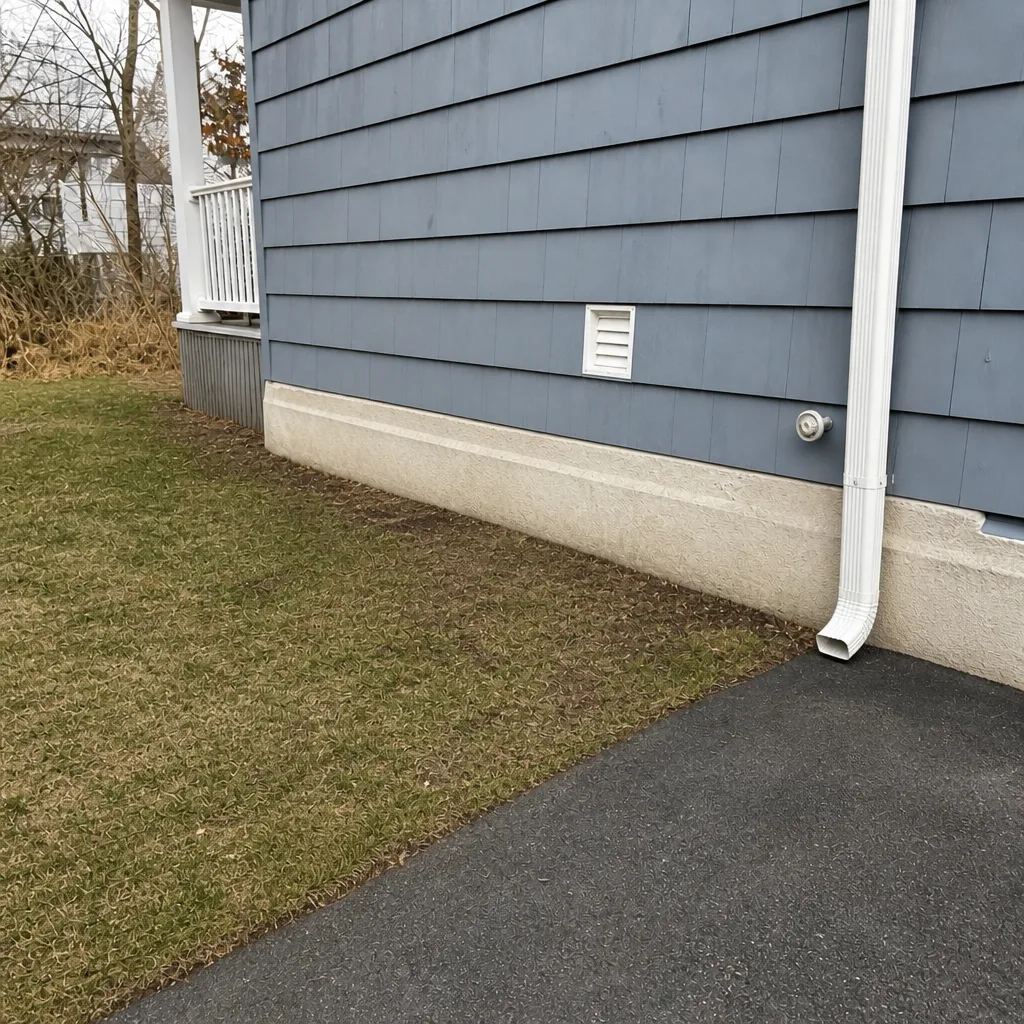
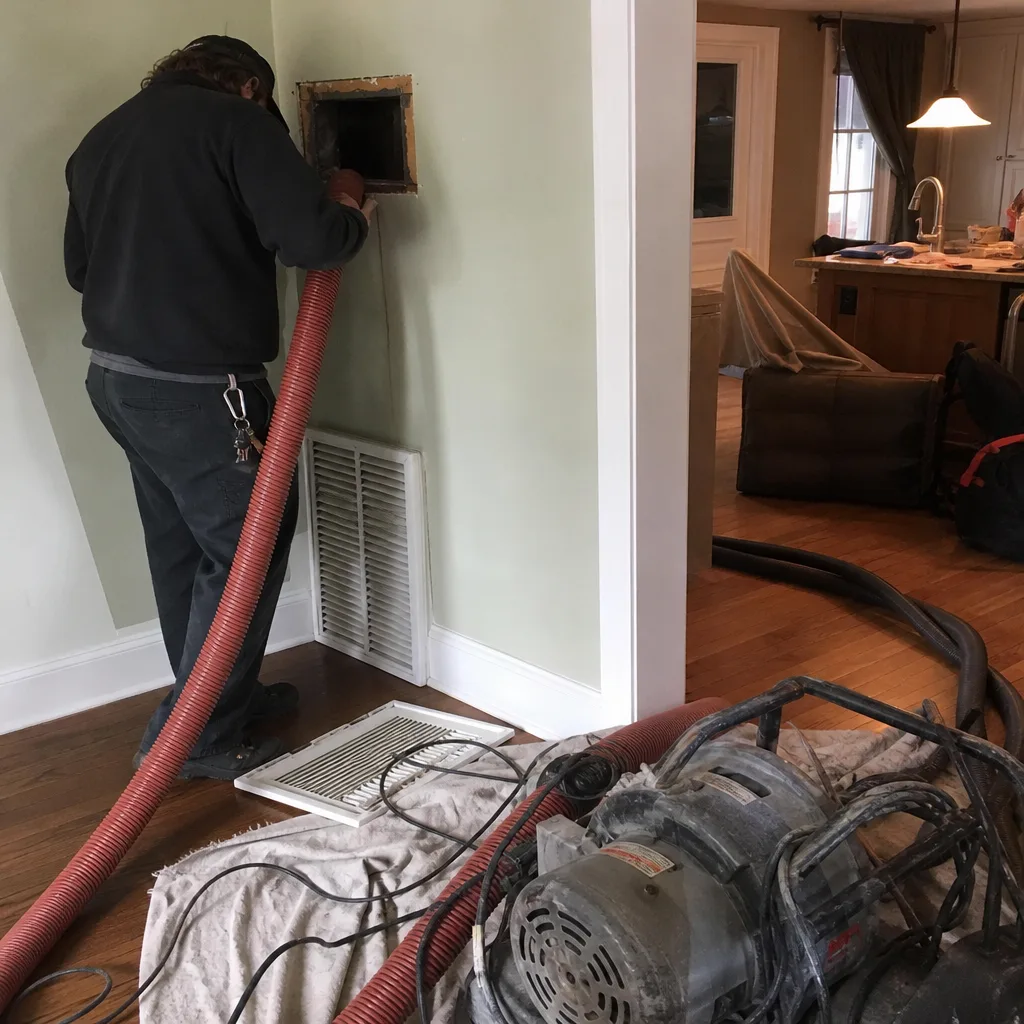 Before
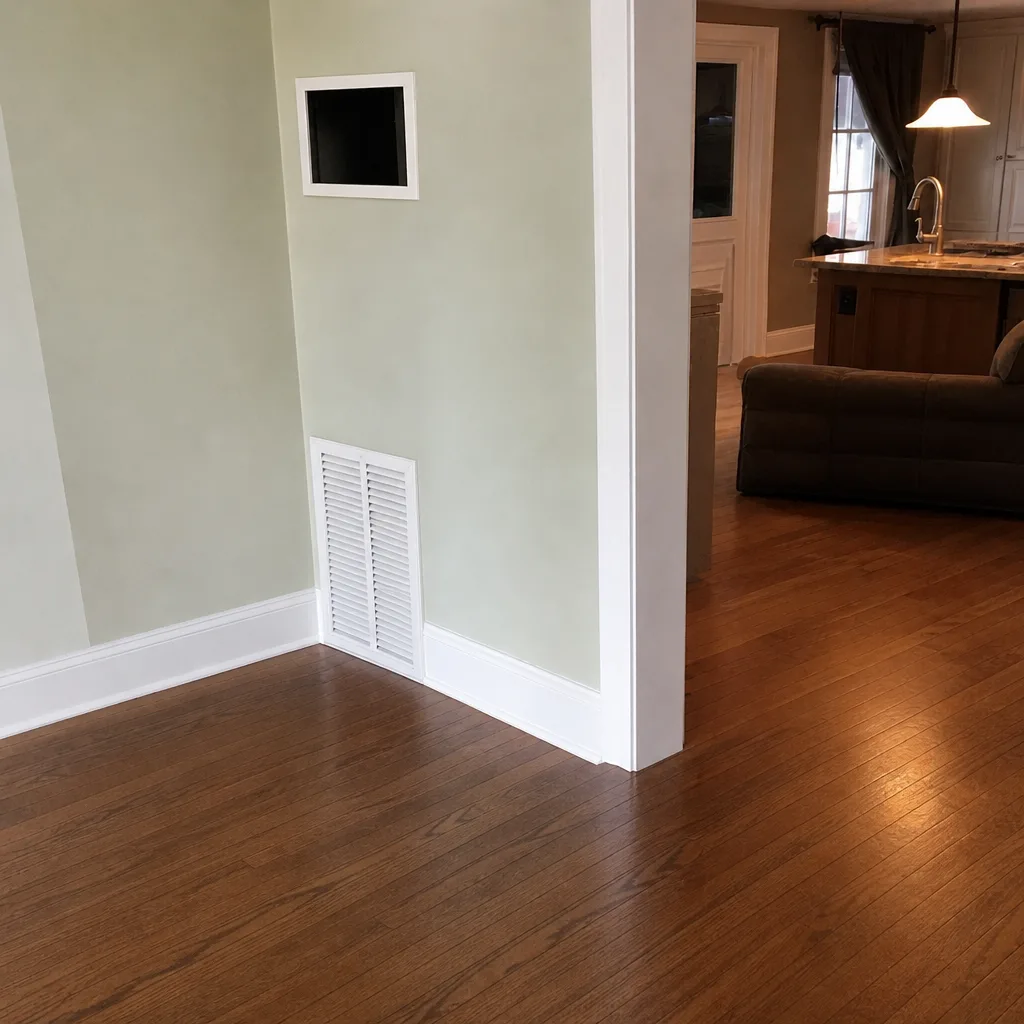 After
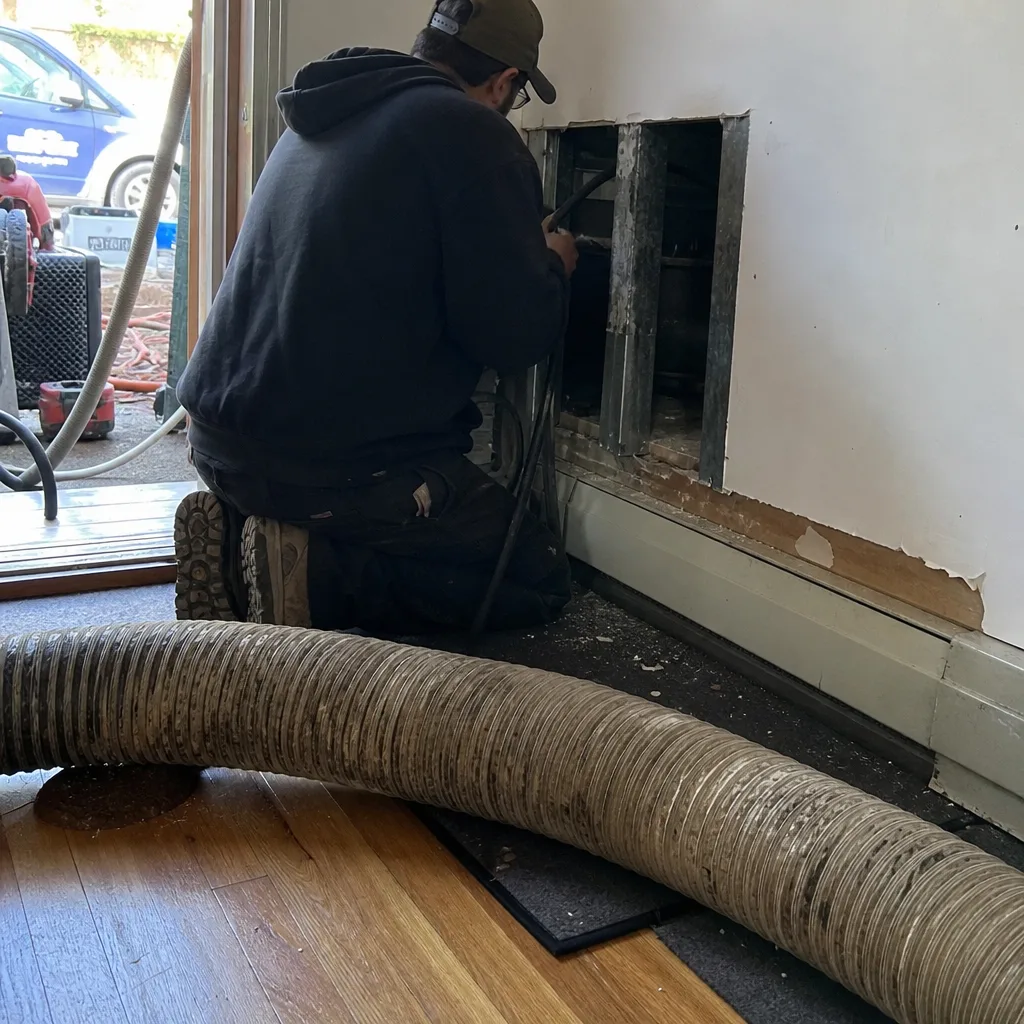
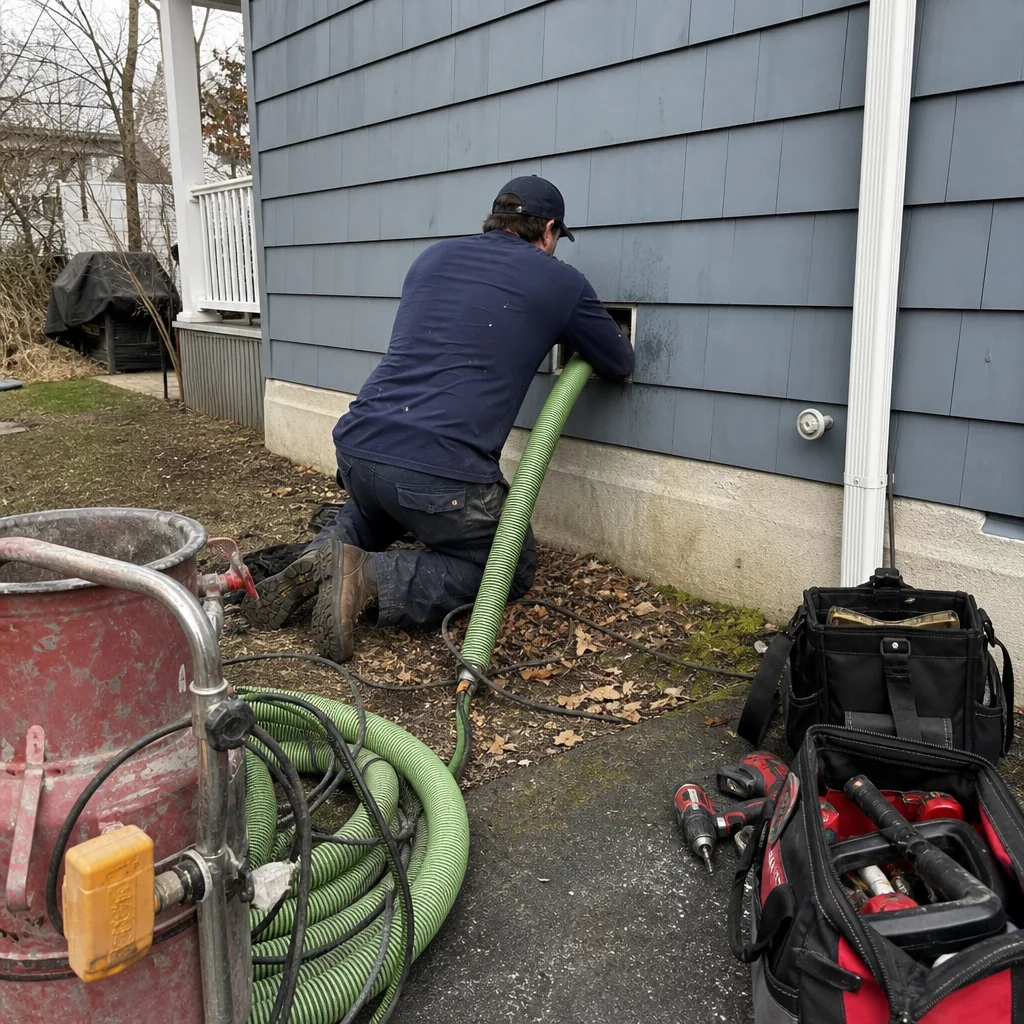 Before
 After
 Before
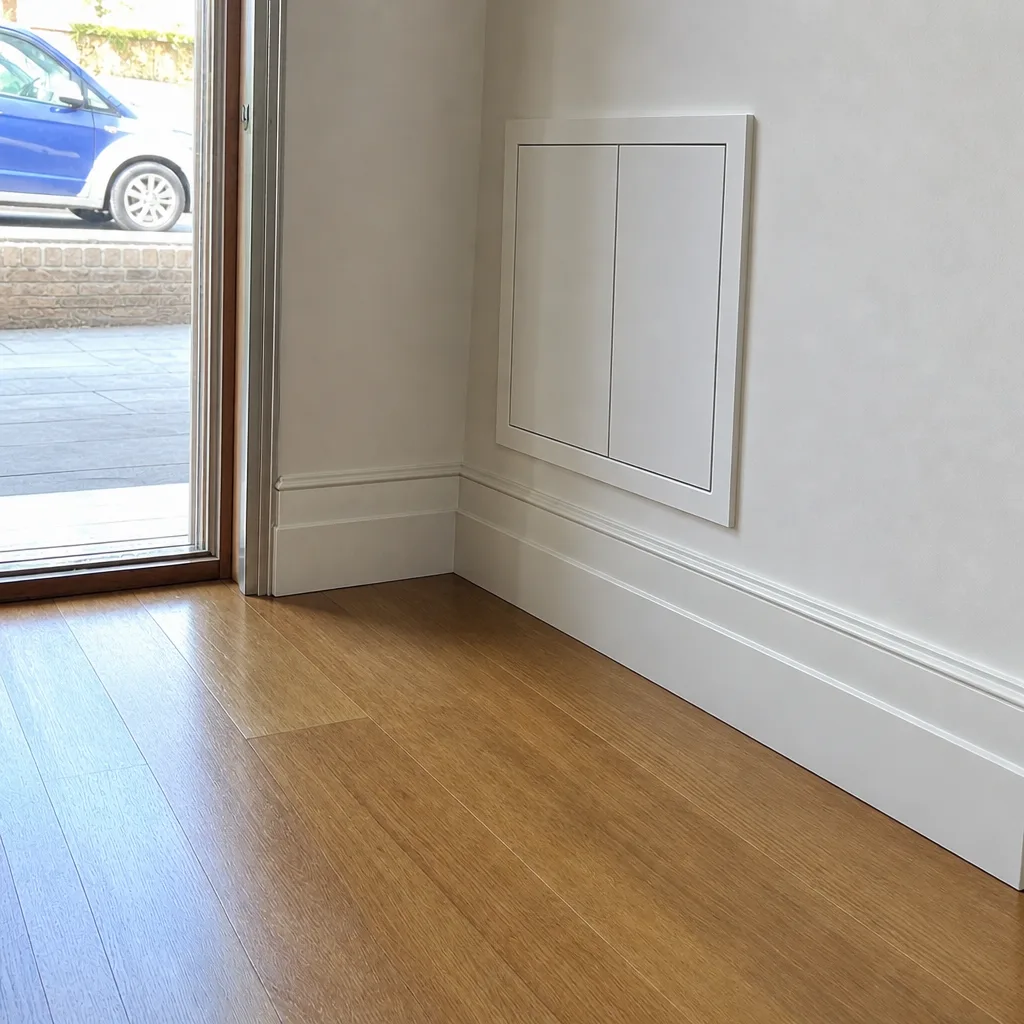 After
When to Call a Professional
Call when you’ve had a cleaning and the dust came back fast, when a room never gets comfortable while the rest of the house does, when there’s a musty smell that appears only with the system running, or when you’ve inherited a home and don’t know the system’s history. Also call if the dryer takes longer to dry than it used to, or the vent flap outside stops opening. Those are the situations where a wrong guess costs money and time, and a professional can sort them quickly. Our technicians have up to 15 years of experience and can tell the difference between dirt, a failed cleaning, and a broken duct. Duct Cleaning New Bedford offers free estimates in New Bedford. Call (844) 793-0706. We answer 24/7. Fast dispatch from 7am to 7pm, Sunday through Friday.
Frequently Asked Questions
Air duct cleaning in New Bedford is priced per system, not per vent, and the final number depends on the number of runs, the layout, and the condition of the system. The written estimate sets the price, one flat rate per system agreed before work starts. Call (844) 793-0706 for an exact quote. Estimates are free.
Cheap quotes usually reflect cheap equipment: a shop-style vacuum and a single hose instead of a negative-pressure rig with mechanical agitation. A cheap machine can’t hold a whole system under suction, so debris gets loosened and redistributed rather than removed. The low price is often the reason the cleaning doesn’t hold. Call (844) 793-0706 and we’ll walk through what your system actually needs.
Ask for before-and-after photos of your own ducts, and check a supply register and the return yourself with a flashlight and phone camera before the technician leaves. A company confident in its process will show you the branch runs, not just the trunk. Call (844) 793-0706 to book a visit with photos included.
There’s no fixed schedule that fits every home. The honest answer is that timing depends on your system, your home, pets, renovations, and what you’ve inherited. If you’ve just bought a New Bedford home or you can’t remember the last cleaning, that’s the moment to have it looked at. Call (844) 793-0706 for an assessment.
Fast-returning dust usually means the cleaning missed the branch runs or wasn’t done under proper negative pressure, or that there’s a leak or disconnected run pulling dust in. Check the accessible runs yourself, then get the system inspected. Call (844) 793-0706 and we’ll diagnose it.
Only if the ducts were the source. Persistent musty odor after cleaning usually traces to microbial growth on the evaporator coil or standing water in the drain pan, which are outside the duct runs. A technician should check the air handler. Call (844) 793-0706 to talk it through.
The Bottom Line
When cleaning doesn’t work, the fault is almost always one of three things: the equipment couldn’t move enough air to do the job, the system has a repair problem cleaning can’t address, or the real source of the complaint is outside the ducts. The good news is that all three are diagnosable, and you can do a lot of the checking yourself with a flashlight and a phone camera. Ask what equipment a company uses, insist on before-and-after photos of your own ducts, and don’t pay per vent. If you want a straight answer on your New Bedford home’s ducts, or a free estimate on duct cleaning New Bedford, call (844) 793-0706. We answer 24/7. Fast dispatch from 7am to 7pm, Sunday through Friday. One flat price per system, agreed before work starts.
Written by the team at Duct Cleaning New Bedford.