
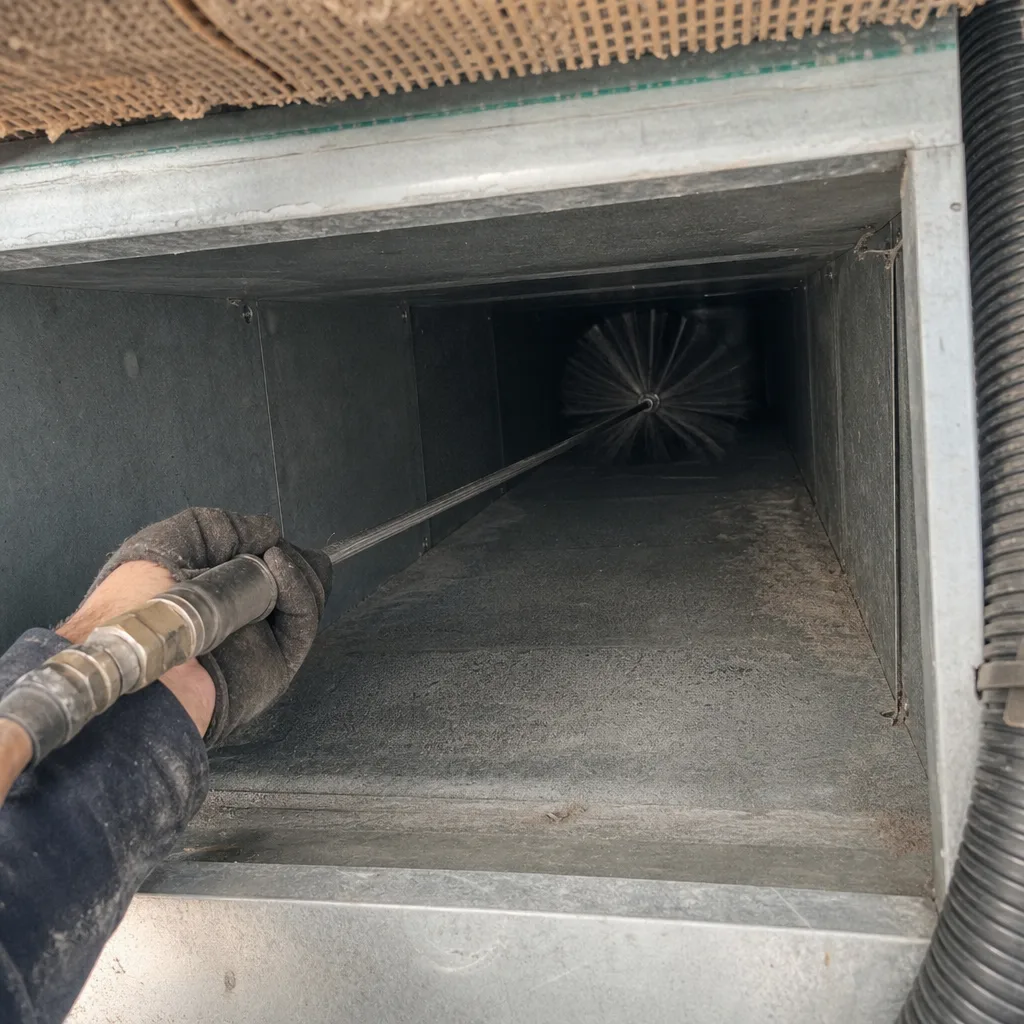
Last updated November 15, 2026
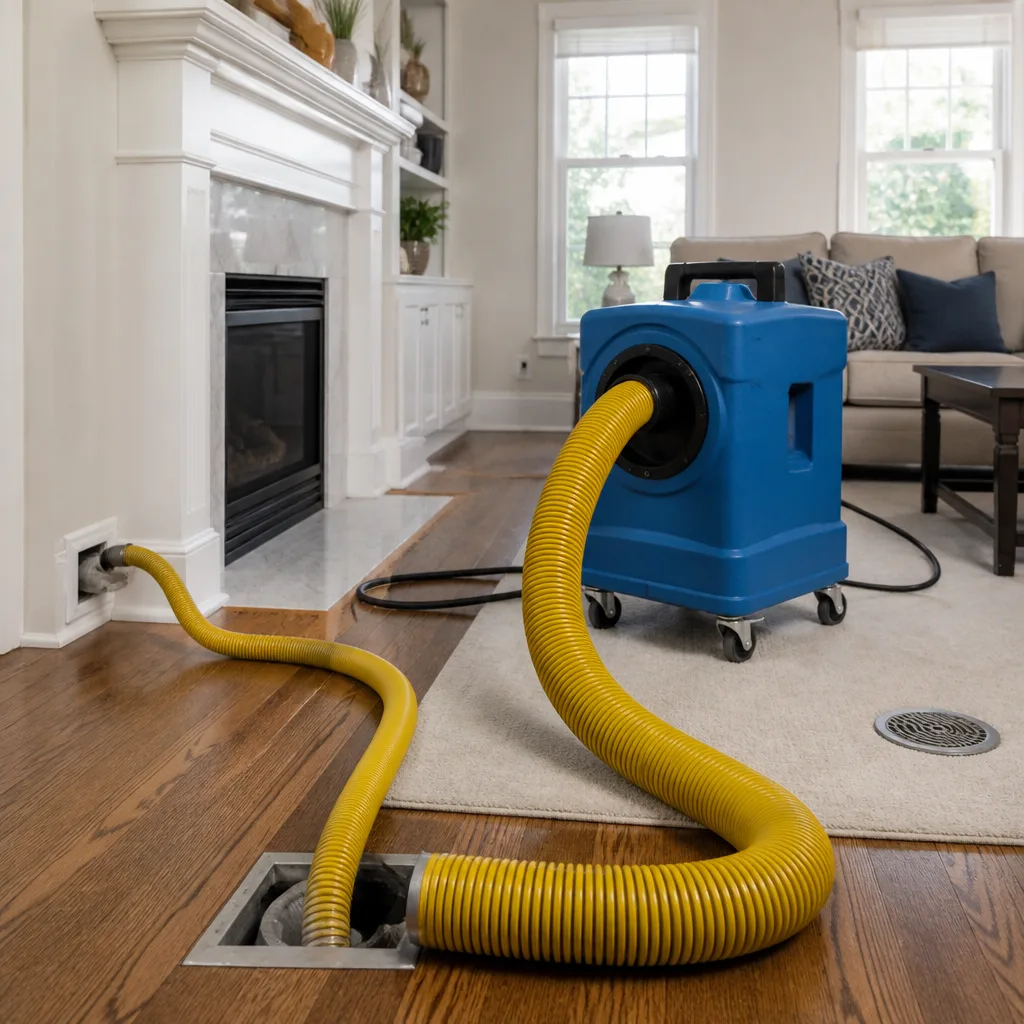 Whole-home duct cleaning
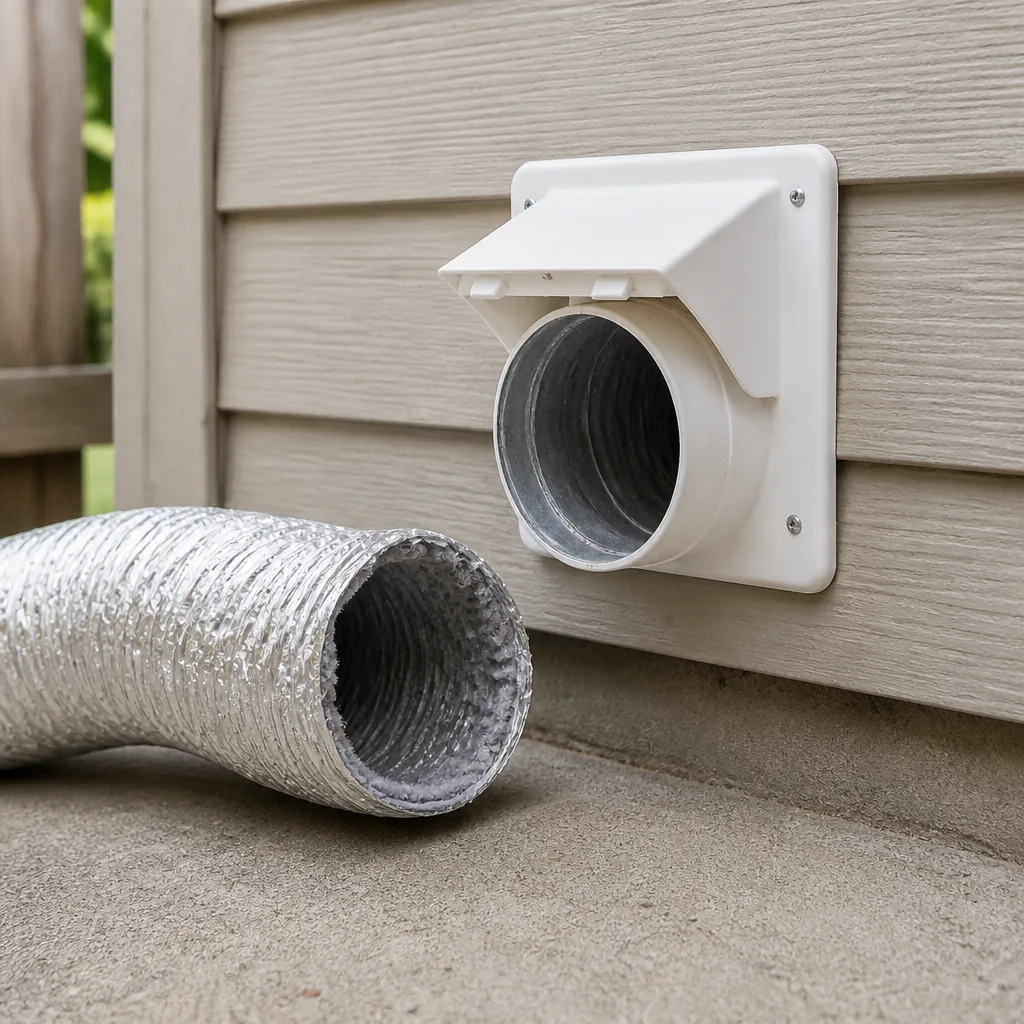 Dryer vent cleaning
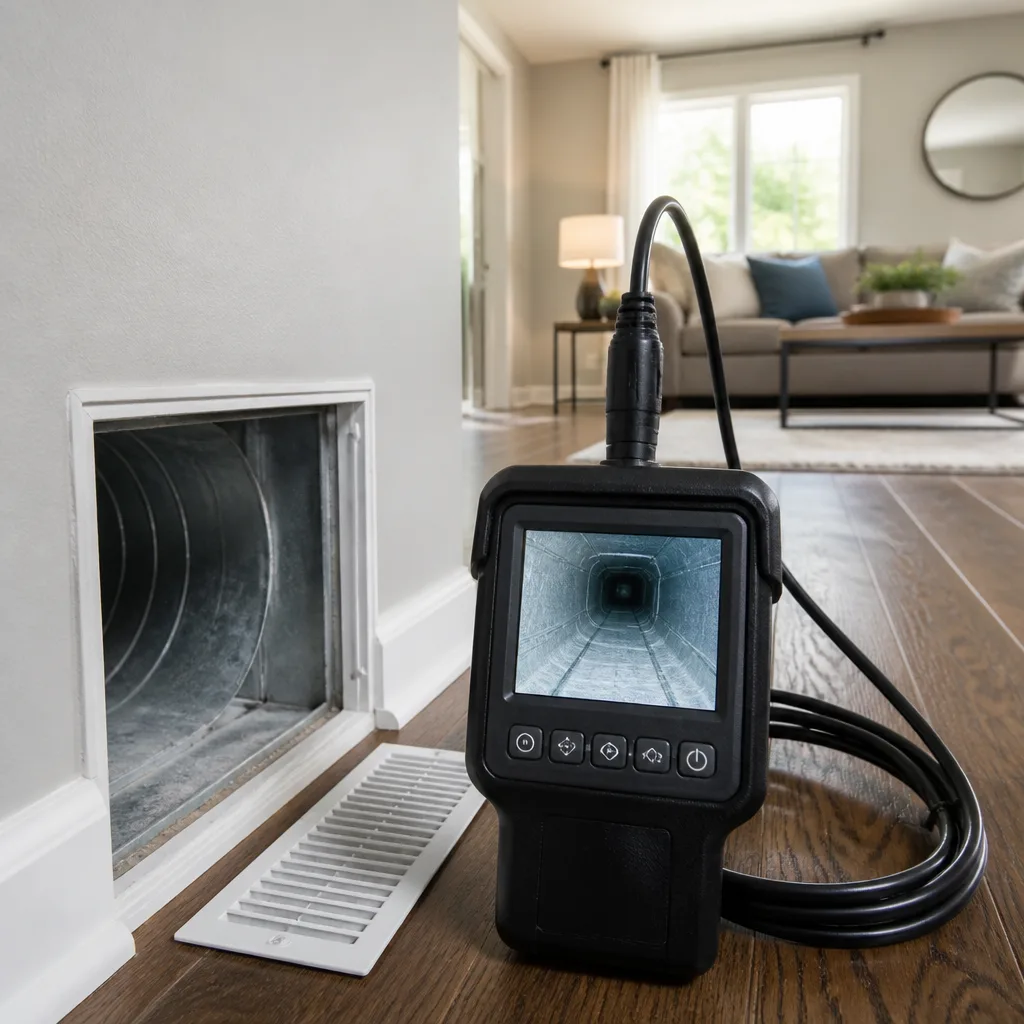 Camera inspection
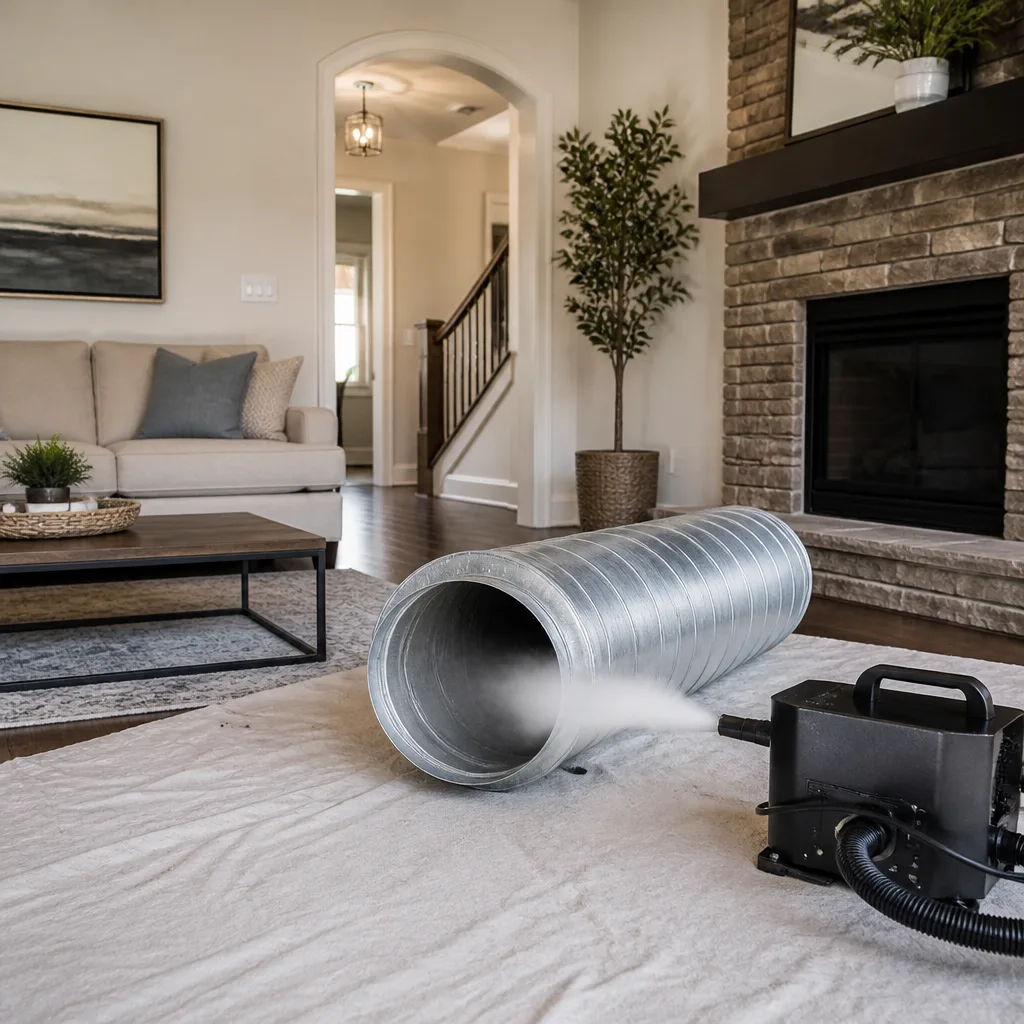 Sanitizing & deodorizing
Whole-system duct and dryer vent check with before-and-after photos - you see exactly what came out of your vents
That "$99 whole-house special" is a bait ad - the real number appears once they are in your hallway, or the "clean" is a shop-vac at the register. We photograph the inside of your ducts before and after instead.
Seasonal Air Duct Cleaning Care for New Bedford: Year-Round Homeowner’s Guide
Most duct cleaning advice says the same thing: clean every three to five years and forget about it. That schedule treats a duct system like a clock that runs at a constant rate, and in New Bedford it doesn’t. Your ducts are exposed to three separate contamination events every year. One is a heating season that runs roughly October through April, one is a coastal pollen peak in May and June, and one is a humid stretch through August that keeps interior surfaces damp long enough for trouble to start. The usual calendar ignores all three. This guide lays out what each season does to a New Bedford duct system, how to recognize it early, and how to build a rolling two-year maintenance schedule around your heating system type and your home’s age.
Quick Answer
Air duct cleaning in New Bedford is best scheduled around three seasonal events rather than a fixed number of years: a cleaning before the heating season starts in fall, filter upgrades and return-path checks in winter, a return-air inspection after the May and June pollen peak, and a moisture check on any duct runs that pass through unconditioned space during the humid summer months. A two-year rolling calendar that alternates a full cleaning with an inspection keeps the schedule tied to what actually loads your system instead of a generic rule of thumb.
Styles & brands we work with
- Whole-home duct cleaning
- Dryer vent cleaning
- Camera inspection
- Sanitizing & deodorizing
Table of Contents
- Why Season Timing Matters More Than a Cleaning Interval
- Fall: Clean Before the First Heat Cycle, Not After
- Winter: What Continuous Heating Runtime Does to Your Ducts
- Spring: Pollen Infiltration Through Your Return-Air Intakes
- Summer: The Humidity Window Inside Unconditioned Duct Runs
- Building Your Two-Year Rolling Maintenance Calendar
- Matching the Schedule to Your Heating System and House Age
- Signs Your Ducts Are Overdue Right Now
Why Season Timing Matters More Than a Cleaning Interval
A duct system holds whatever the air moving through it leaves behind. The amount of material that lands there depends on what is in the air, how much air is moving, and whether the surfaces inside the ducts stay dry. All three change with the season in New Bedford, and they don’t change at the same rate.
Winter is the highest-volume period. Your heating system runs for long stretches, so the blower pushes far more air through the ducts than it does in a mild month. Every cubic foot of that air carries dust from inside the house, and the system’s filter only catches part of it. Spring flips the loading source entirely. The blower runs less, but the outdoor air carries pollen, and return-air intakes pull that pollen into the system whenever windows are open or the house is under slight negative pressure. Summer adds a moisture variable that the other two seasons don’t have.
The practical result is that a home can look clean at the registers and still have a loaded main trunk or a damp run inside a wall cavity. That’s why we treat the New Bedford calendar as a contamination timeline rather than a countdown. You’re not waiting for a number of years to pass. You’re scheduling the work around the events that actually put material into the system.
Two things stay constant through all four seasons. One is the filter, which is the cheapest lever you have. The other is the integrity of the ductwork itself. A system with a disconnected joint or a crushed flex run will load faster in every season, no matter what the calendar says. That’s why our approach pairs cleaning with repair capability rather than treating them as separate trades. For the broader overview of what a full cleaning involves, see duct cleaning in New Bedford.
Fall: Clean Before the First Heat Cycle, Not After
The single most useful scheduling decision in New Bedford is to clean before the heating system comes on for the season, not after. Here’s why. Dust, pollen, and debris accumulate in the ducts all summer while the blower runs less and windows are open more. When the heating season starts, the blower begins pushing that accumulated load through every room in the house at once. The first heat cycles are when the dust that built up over the summer gets distributed, and it’s also when most homeowners first notice a smell or a visible dust plume at the registers.
Cleaning after the first cycle works, but you’ve already spread the material through the living space. Cleaning before it means the system starts the season empty.
What Fall Cleaning Addresses
- Summer-accumulated dust and pollen sitting in the main trunk and branch runs
- Debris that entered through return-air intakes while windows were open
- Light material on the blower wheel and accessible components
- Any duct run that shows signs of a loose joint or sagging flex section before the heavy-runtime season begins
How a Fall Cleaning Usually Runs
- Inspection before equipment setups. We look at the return drops, the supply runs, and any duct that passes through unconditioned space before anything gets connected.
- Negative-pressure setup. A mechanical cleaning rig from Rotobrush or Nikro pulls material out of the system under controlled suction rather than pushing it into the rooms.
- Mechanical agitation through the runs. The cleaning head works through each branch, loosening material that has adhered to the duct walls.
- Containment where it’s needed. For homes with elevated dust or allergy concerns, we bring in Abatement Technologies equipment to keep what’s being removed from re-entering the living space.
- Before-and-after photos of your own ducts. You see what came out of your system, not a stock image.
- Filter replacement and a note on any defects found. If a joint is loose or a run is compromised, we flag it and give you a written estimate for the repair.
One flat price per system is agreed before any of this starts. No per-vent pricing, no surprise line items once the equipment is in the driveway. For the full details of the service itself, see air duct cleaning.
Winter: What Continuous Heating Runtime Does to Your Ducts
Winter is the season with the most air moving through your ducts and the least opportunity to clean them. The heating system runs for long, continuous stretches from roughly October through April in New Bedford. Every hour the blower runs, the system’s filter catches some of the dust in the air and passes the rest through to the ductwork. Over four to six months of steady runtime, that adds up.
You can’t empty the ducts in the middle of winter, but you can slow the loading rate. That’s where filter upgrades do measurable work.
Filter Upgrades That Slow Winter Loading
The filter you run during heating season is the highest-leverage choice you’ll make all year. A higher-efficiency pleated filter captures more of the fine dust that would otherwise settle in the ductwork and the blower compartment. The catch is that a filter that’s too restrictive for your blower can reduce airflow and put extra strain on the system. This is where system-level thinking matters. Our team works with Honeywell and Aprilaire product lines, which lets us match filtration to the system rather than selling a filter on MERV rating alone.
General guidance:
- Match the filter to what your system can actually move. A high-MERV filter on a system designed for lower restriction can cause more problems than it solves.
- Check the filter more often during heating season than the packaging suggests, especially if you have pets or a lot of foot traffic.
- Note the pressure drop if your system has a way to show it, or have the static pressure checked during any service visit.
- Look at the filter housing itself. A filter that’s sitting crooked in the housing lets unfiltered air bypass it, which defeats the upgrade entirely.
What to Watch During Heating Season
- A dust plume at the registers on the first heat cycles means the ducts are loaded and the blower is distributing what was already there.
- A musty or dusty smell on startup can come from material on the heat exchanger, the blower, or the ducts themselves. A technician can tell you which.
- Uneven heating room to room can be a duct problem rather than a furnace problem.
- Increased allergy or dust symptoms during the heating months is a reason to inspect the system, not a reason to assume the ducts are fine.
If something is clearly wrong mid-season, don’t wait until spring. We treat duct repair as part of the same service offer as cleaning. We clean it, and if it’s broken, we fix it. You can read more about how we work in New Bedford.
Spring: Pollen Infiltration Through Your Return-Air Intakes
New Bedford’s coastal pollen season peaks in May and June, and that’s the second contamination event of the year. What makes pollen different from dust is that it enters through the same path as household air: the return-air intakes. Every time the system runs with windows open, or the house is under slight negative pressure from stack effect or exhaust fans, outdoor pollen is pulled into the return side of the system. From there it travels through the filter, and whatever the filter doesn’t catch ends up in the ductwork and on the blower.
The filter does most of the work. The question is whether the rest of the system is amplifying whatever gets past it.
How to Tell If Your Duct System Is Amplifying Allergen Levels
Watch for these signs after the pollen peak, especially in late June and early July:
- Dust buildup at the supply registers that returns shortly after you clean them
- Visible dust plumes at registers when the system kicks on
- Allergy symptoms that track with the system running, not with the outdoor pollen count
- A stale or dusty smell from the registers that wasn’t there in winter
- Family members who report more congestion indoors than outdoors during the pollen weeks
Two or more of those together is a reasonable reason to book an inspection. The return path is where we look first, because return-air intakes are the entry point for outdoor pollen and the most common place to find a filter that’s bypassing or a return that’s pulling from an unintended space.
Return-Air Checks We Do in Spring
- Inspect every return grille and the filter housing behind it. Bypass around a filter is more common than most homeowners expect.
- Look at the return drops and the main return trunk. A return trunk that’s drawing from a crawlspace or a mechanical closet can pull whatever is in that space into the system.
- Check the blower compartment. Pollen and dust that make it past the filter tend to collect on the blower wheel, which reduces airflow and can throw the wheel off balance.
- Photograph what we find before and after cleaning. You see the difference, not a description of it.
Regular inspection after the pollen peak is one of the highest-value items on the New Bedford seasonal calendar.
Summer: The Humidity Window Inside Unconditioned Duct Runs
Summer is the season most duct systems get ignored, and it’s the one where moisture does the most quiet damage. New Bedford’s high-humidity window stretches through August. Interior duct surfaces can stay damp for long enough during that window for trouble to start, and the ducts that are most exposed are the ones running through unconditioned space: attics, garages, crawlspaces, and wall cavities that aren’t part of the conditioned envelope.
The temperature differential matters as much as the humidity. A duct carrying cool conditioned air through a hot, humid attic will sweat on the outside, and a duct carrying air at a different temperature than the surrounding space can condense moisture on the inside. Both cases create the conditions for surface growth on the duct material.
Early Signs of Moisture Trouble in Ducts
- A musty smell that appears in summer and fades in fall
- Visibly damp or darkened insulation on duct runs in the attic or crawlspace
- Condensation on the exterior of supply runs
- Water staining or rust on the duct jacket
- Increased dust or visible growth at the supply registers
- Higher humidity inside the house than the AC is set to maintain
What We Check During a Summer Inspection
- Every run passing through unconditioned space. Attic runs get looked at directly, not assumed.
- Insulation integrity on those runs. A gap or a crushed section of insulation is where moisture problems start.
- Condensate management around the air handler. A pan that’s not draining properly is a moisture source upstream of the ducts.
- Filter condition. A filter that’s loading up during summer increases pressure drop and reduces the system’s ability to manage humidity.
- The return side in particular. A return run in a damp crawlspace or attic is the most common place we find a moisture issue that starts in the ducts rather than in the equipment.
Catching a duct moisture problem early is much cheaper than dealing with the aftermath, which can include duct replacement and interior repairs. We bring contractor-grade equipment from Abatement Technologies specifically because elevated indoor air quality situations call for containment, not just a shop vac. We recommend reading about our dryer vent cleaning service alongside the duct work, since the two systems share the same humidity risks in summer.
Building Your Two-Year Rolling Maintenance Calendar
A rolling two-year calendar is more useful than a “every three to five years” rule because it lets you alternate a full cleaning with a lighter inspection, and it lets you align each item with the season that actually loads the system. Here’s a template you can adapt to your home.
Year One
- September (before heating season): Full air duct cleaning. New filter installed. Note any duct defects found and repair if needed.
- November (early heating season): Filter check two to three weeks in. Note any smell or dust plume at registers. Adjust filter replacement interval if needed.
- March (late heating season): Filter change. Quick look at return grilles and supply registers for dust buildup.
- Late June (after pollen peak): Inspection of return path and blower compartment. Photograph findings.
- August (humidity window): Moisture check on duct runs in unconditioned space.
Year Two
- September: Inspection rather than a full cleaning if the system was cleaned the previous fall and the filter has been maintained. If the inspection finds a load, proceed to cleaning.
- November through March: Filter maintenance. Note anything that changes in comfort, smell, or dust at registers.
- Late June: Return path and blower compartment inspection.
- August: Moisture check on unconditioned duct runs.
- Repeat cycle, with full cleaning at the start of the following fall.
Homes with pets, high foot traffic, recent renovation, or a family member with significant allergies, it’s usually worth moving to an annual cleaning rather than alternating. Homes with low occupancy and a well-maintained filter can stretch the cycle. If you want to know where your home falls, the written estimate is the right conversation. Call (844) 793-0706 for a free estimate.
Matching the Schedule to Your Heating System and House Age
The chapter that follows is where the general calendar gets tuned to your actual house. Two New Bedford homes on the same street can need very different schedules depending on what’s heating them and how old the ductwork is.
Forced-Air Oil Heat
Oil-fired forced-air systems are common across New Bedford, and they shape the schedule in one specific way. Combustion means a small amount of soot is possible over time, particularly if the burner isn’t set up cleanly, and soot travels differently than dust. It’s darker, it stains, and it tends to collect in the same areas as dust. Homes on oil heat benefit from cleaning before the heating season rather than after, and from a look at the furnace-side duct connections during any cleaning visit. If you smell oil or observe sooting, have the burner serviced before running the system hard; the ducts shouldn’t be the first thing you look at in that case.
Forced-Air Gas Heat
Gas-fired forced air behaves much like oil in terms of duct loading, but the furnace-side duct connections are worth looking at carefully during any cleaning visit. Any sign of exhaust smell, backdrafting, or unusual soot at the supply side is a reason to bring in a licensed HVAC technician before duct work proceeds. Duct cleaning doesn’t fix combustion problems, and we don’t pretend it does.
Heat Pump and Electric Forced Air
Heat pumps run more hours and often at lower supply temperatures than combustion systems, so the blower is circulating air continuously through more of the year. That tends to mean faster loading in spring and fall, when a combustion system would be idle. A heat pump home often benefits from a lighter inspection more frequently and a full cleaning on the same fall schedule.
Duct Type and House Age
Older New Bedford homes with older duct systems need a closer look at duct integrity, not just cleanliness. If the ductwork uses older materials that are deteriorating, cleaning without repair can make things worse, because degrading material is the load. This is one reason we check duct integrity before we clean, not after. If a run is compromised, we fix it. That’s the difference between a duct specialist and a truck with a hose.
Newer homes are more likely to have flex duct runs, which are less tolerant of crushing and sagging than rigid metal. Flex runs that have been compressed in an attic or bent around a corner restrict airflow and collect material at the restriction.
In all cases, the written estimate gives you the actual scope for your home, one flat price per system.
Signs Your Ducts Are Overdue Right Now
Before you wait for the next season, run through this checklist. Any of these together is a reason to schedule an inspection regardless of when the last cleaning was done.
- Dust returns to surfaces within a day or two of cleaning
- Visible dust plumes at supply registers when the system runs
- A musty or stale smell from any register, present year-round or seasonal
- Allergy or asthma symptoms that track with the system running
- Recent renovation, insulation work, or pest activity in the home
- Visible mold or moisture at any register or duct connection
- Uneven airflow room to room that wasn’t there before
- Visible loose, disconnected, or crushed duct runs in the attic, crawlspace, or basement
- A dryer that’s taking longer than usual to dry a load (a separate system, but a related safety check)
If you check off more than two of these, it’s worth a call. The inspection is free, and the written estimate sets the scope and the price.
Common Mistakes to Avoid
- Scheduling the annual cleaning after the first heat cycle instead of before. Cleaning after startup means you’ve already distributed a summer’s worth of accumulated dust through the house. In New Bedford, September is the right month for most homes.
- Ignoring the return side of the system. Return-air intakes are where outdoor pollen enters during the May and June peak, and they’re the most common place to find a filter bypassing. Cleaning the supply runs and skipping the return path leaves the largest loading source untouched.
- Choosing the lowest quote without asking about equipment and process. A truck, a hose, and a shop vac is not the same service as a Rotobrush or Nikro mechanical rig with negative-pressure setup. Ask what equipment will be used and whether before-and-after photos of your own ducts will be provided.
- Treating every three to five years as a fixed rule. A New Bedford home with pets, high occupancy, or a recent renovation will load far faster than a low-occupancy home with a well-maintained filter. The seasonal events, not the number of years, should set the schedule.
- Skipping the summer moisture check on unconditioned duct runs. A duct running through an attic or crawlspace in August can develop moisture problems that a fall cleaning won’t catch. Inspect the unconditioned runs during the humid window, not after it.
- Cleaning ducts on a system with a known duct defect. A disconnected joint or crushed flex run will just reload after cleaning. We check duct integrity before cleaning so we can fix what’s broken rather than clean around it.
- Forgetting the dryer vent. Dryer vent cleaning addresses a documented fire risk and is a separate system from the air ducts. A seasonal calendar that only covers the HVAC ducts leaves a real safety item off the list.
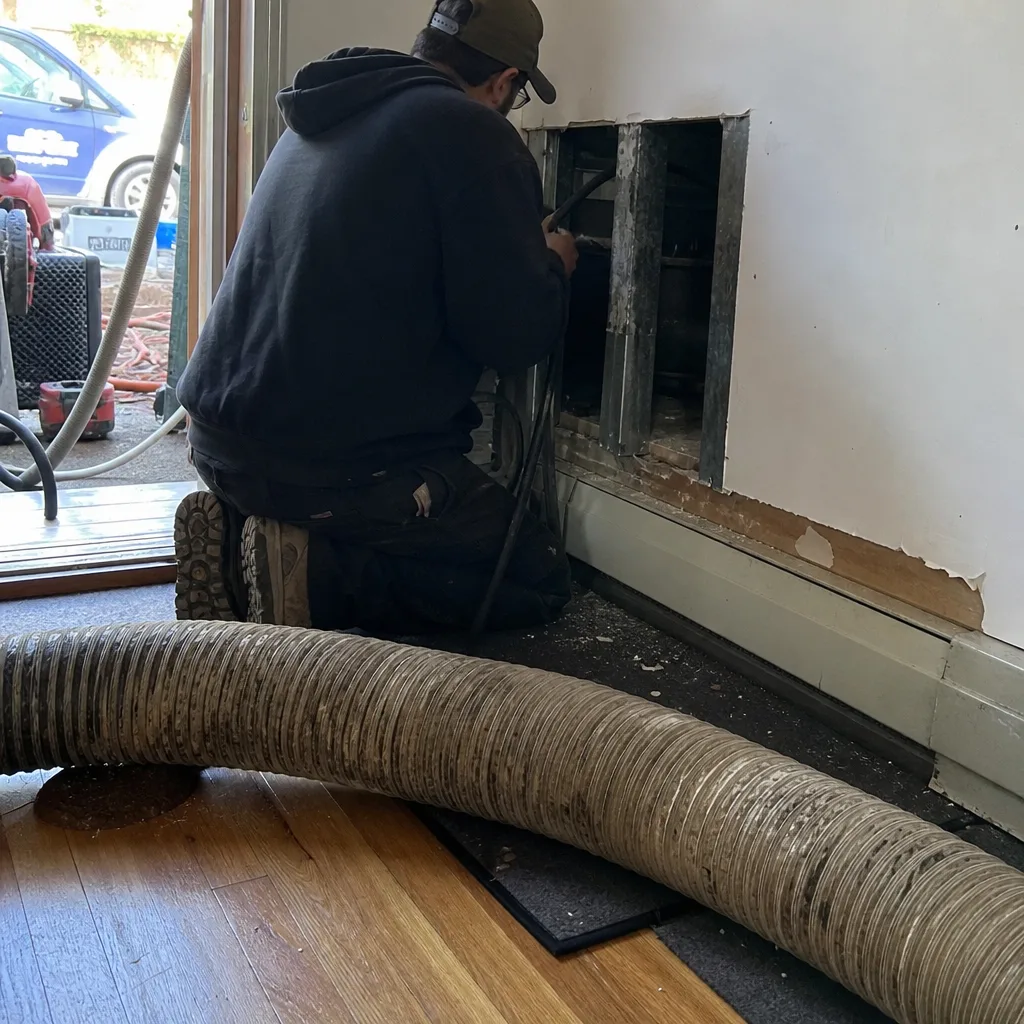
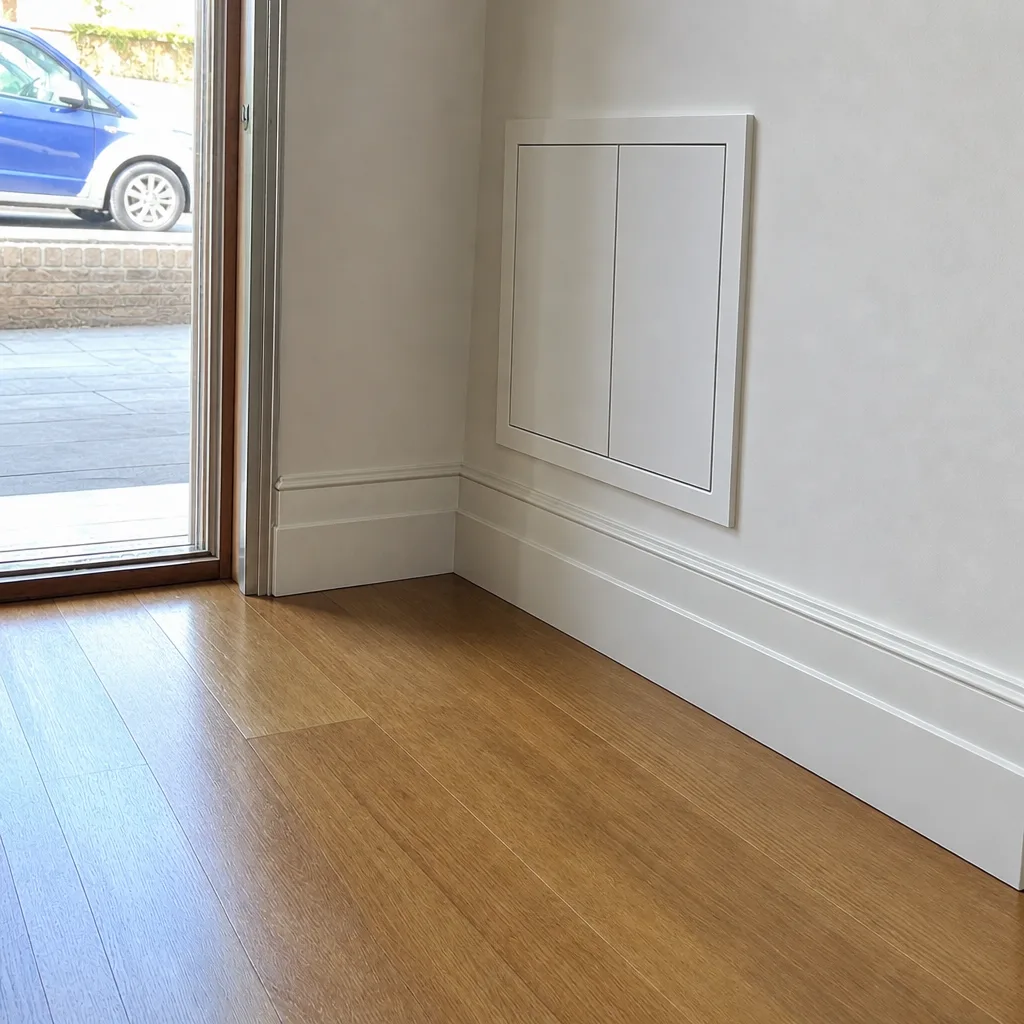
See the difference
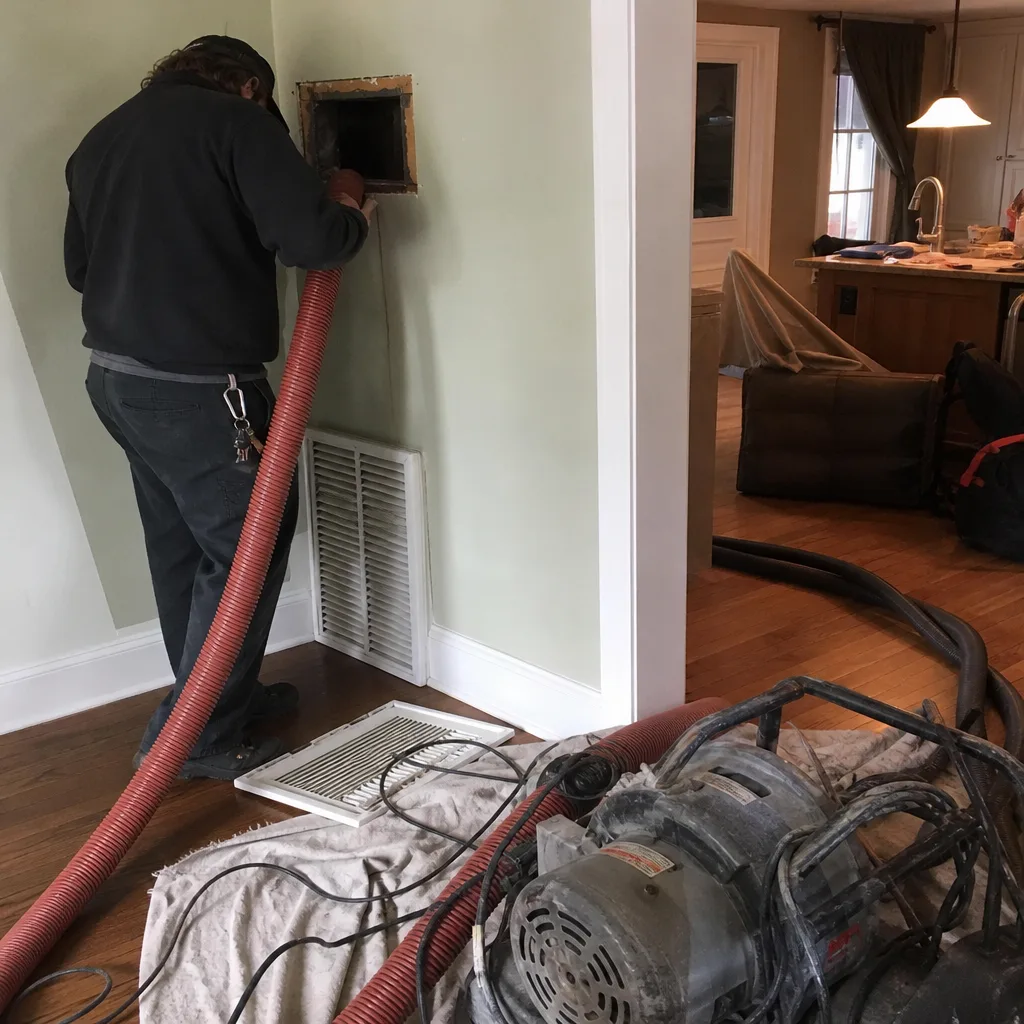 Before
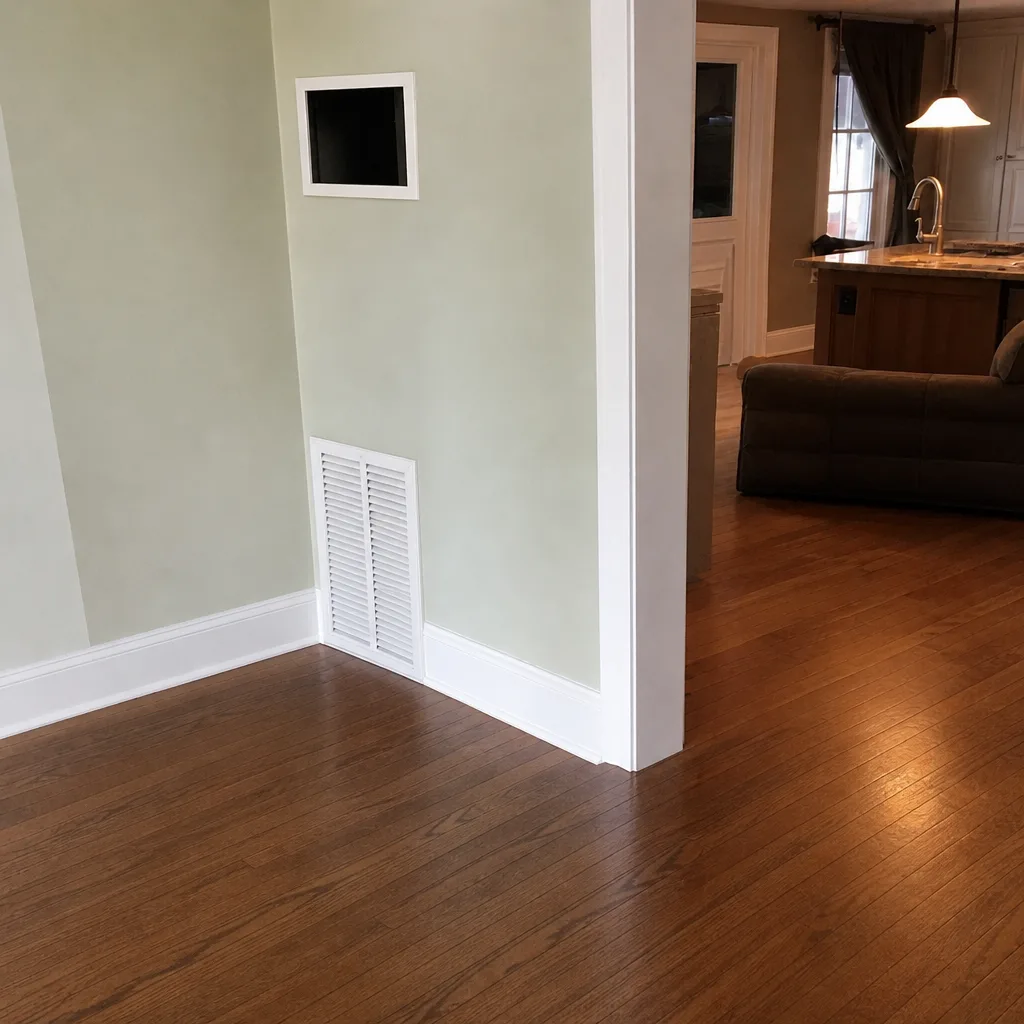 After
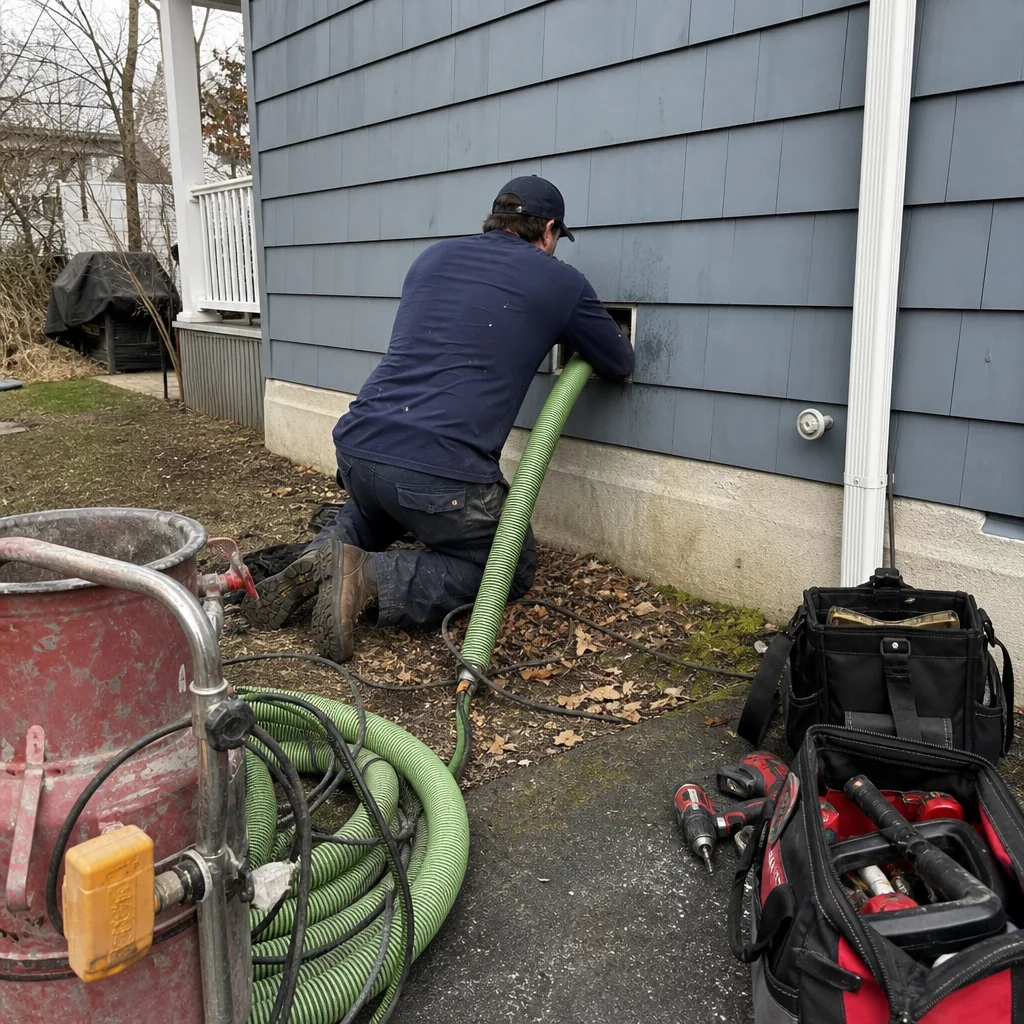 Before
 After
 Before
 After
When to Call a Professional
Not every dust sighting needs a call, but several do. Call when you see a dust plume at a register after the system has been running, when a musty smell appears in summer and doesn’t clear when the weather changes, when you have visible mold or moisture at a duct connection, when a duct run is visibly disconnected, crushed, or sagging, or when you’ve recently finished a renovation or had a pest issue that could have introduced material into the system. Call if a family member’s allergy symptoms clearly track with the system running. Call if your heating season opener brings a smell or a dust problem you can’t trace to the equipment. And call if you inherited a duct system with a new home and don’t know its service history.
Duct Cleaning New Bedford offers free estimates in New Bedford. Call (844) 793-0706. We answer 24/7.
Frequently Asked Questions
For most New Bedford homes, a full cleaning every two years with an inspection in between is a practical starting point, timed to the fall heating season. Homes with pets, high foot traffic, recent renovation, or significant allergy concerns often need a cleaning every year. Homes with low occupancy and a well-maintained filter can sometimes stretch the cycle. The specific conditions in your home, not a fixed number of years, should set the schedule.
Fall is the better time for most homes, scheduled before the heating system comes on rather than after. The heating season runs roughly October through April in New Bedford, and a cleaning before it starts means the system enters the heavy-runtime months empty instead of loaded with summer dust. Spring is the right time for a return-path inspection, especially after the May and June pollen peak.
Because the heating system runs continuously through winter, pushing far more air through the ducts than it does in milder months. Every cubic foot of that air carries dust, and the filter only catches part of it. The rest settles in the ductwork. A filter matched to your system’s airflow capacity, installed correctly with no bypass, is the biggest lever you have to slow the loading rate.
Yes, especially in ducts that run through unconditioned space like attics, crawlspaces, or garages. New Bedford’s high-humidity window stretches through August, and interior duct surfaces can stay damp long enough for trouble to start. A musty smell that appears in summer and fades in fall is the most common early sign. A summer inspection of unconditioned duct runs catches these issues while they’re still cheap to address.
Ask for before-and-after photos of your own ducts, and ask what equipment will be used before the work starts. Rotobrush and Nikro mechanical cleaning rigs with negative-pressure setup are the professional standard, and a crew using one can tell you what it is. Our written estimate sets one flat price per system before work begins, and you get photos of what came out of your ducts. Call (844) 793-0706 for a free estimate.
Because they’re often for a different service: a shop vacuum and a hose, not a mechanical cleaning rig with negative-pressure setup. The price is lower because less is being done. Before you compare quotes, compare what’s included, what equipment will be used, whether the return side is being cleaned, and whether duct integrity is being checked. Our written estimate sets one flat price per system before work starts.
The Bottom Line
New Bedford homeowners get more out of a duct schedule built around the seasonal contamination timeline than out of a fixed number of years. Clean before the heating season starts, maintain the filter through the winter, inspect the return path after the May and June pollen peak, and check unconditioned duct runs during the humid stretch through August. Two things stay constant: the filter is the cheapest lever you have, and duct integrity matters as much as cleanliness. We clean it, and if it’s broken, we fix it.
If you’re ready to put your home on a two-year rolling calendar, or you just want a professional look at what’s actually in your system, call Duct Cleaning New Bedford at (844) 793-0706 for a free estimate. We answer 24/7. Fast dispatch from 7am to 7pm, Sunday through Friday.
Written by the team at Duct Cleaning New Bedford.