
Last updated November 15, 2026
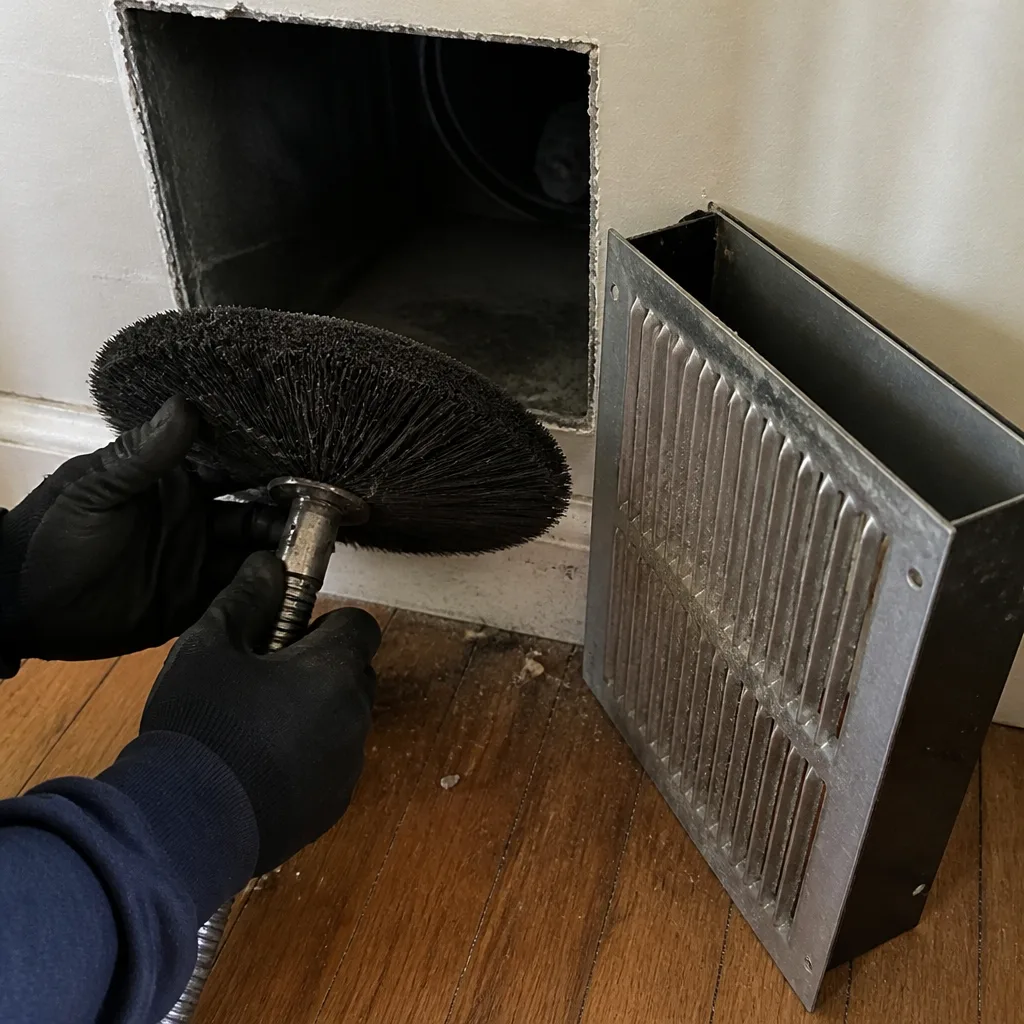
 Whole-home duct cleaning
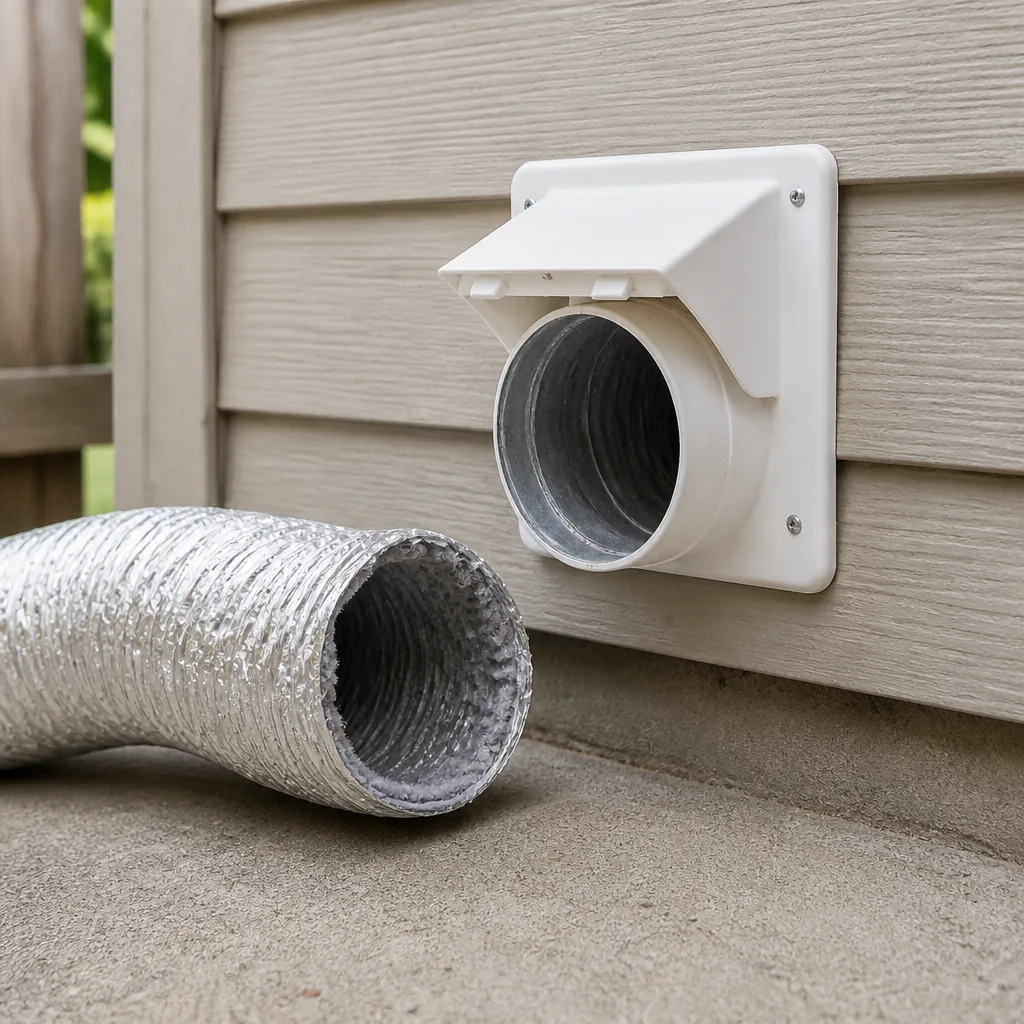 Dryer vent cleaning
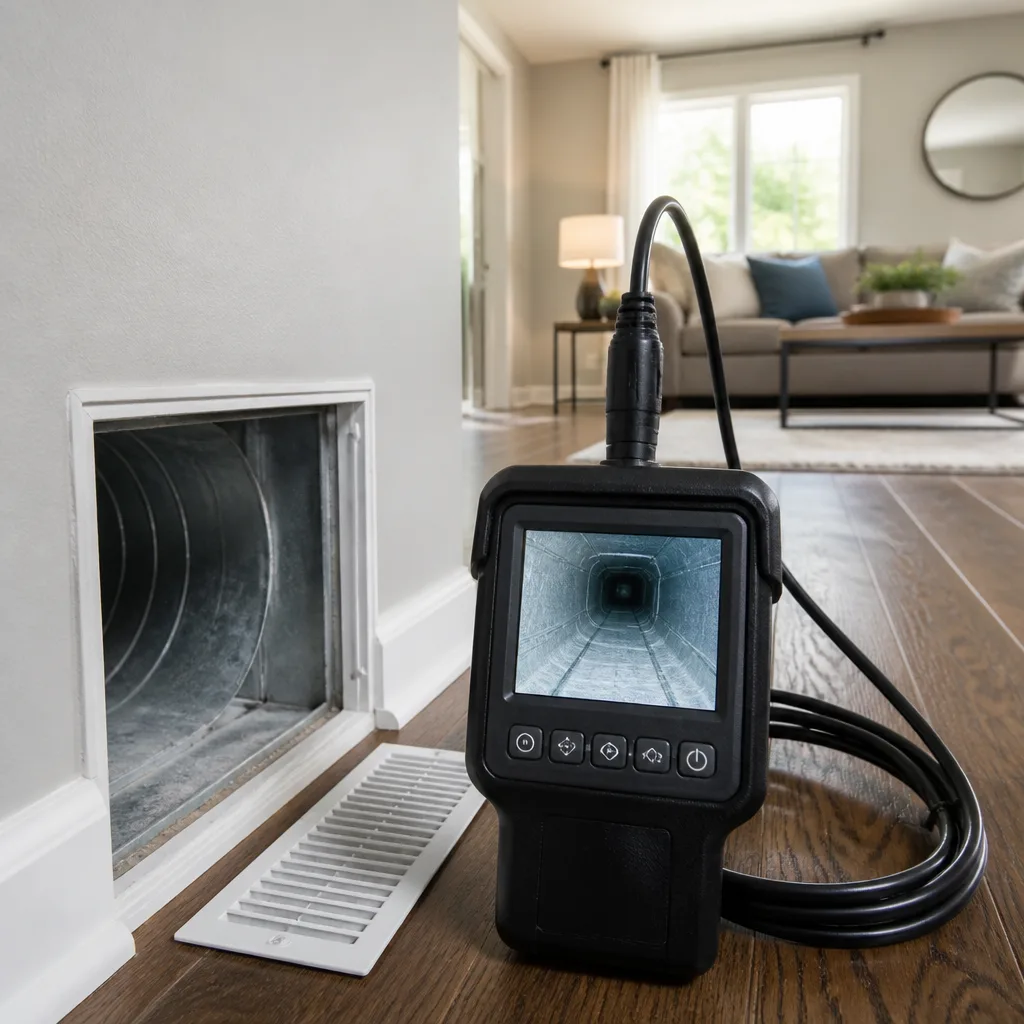 Camera inspection
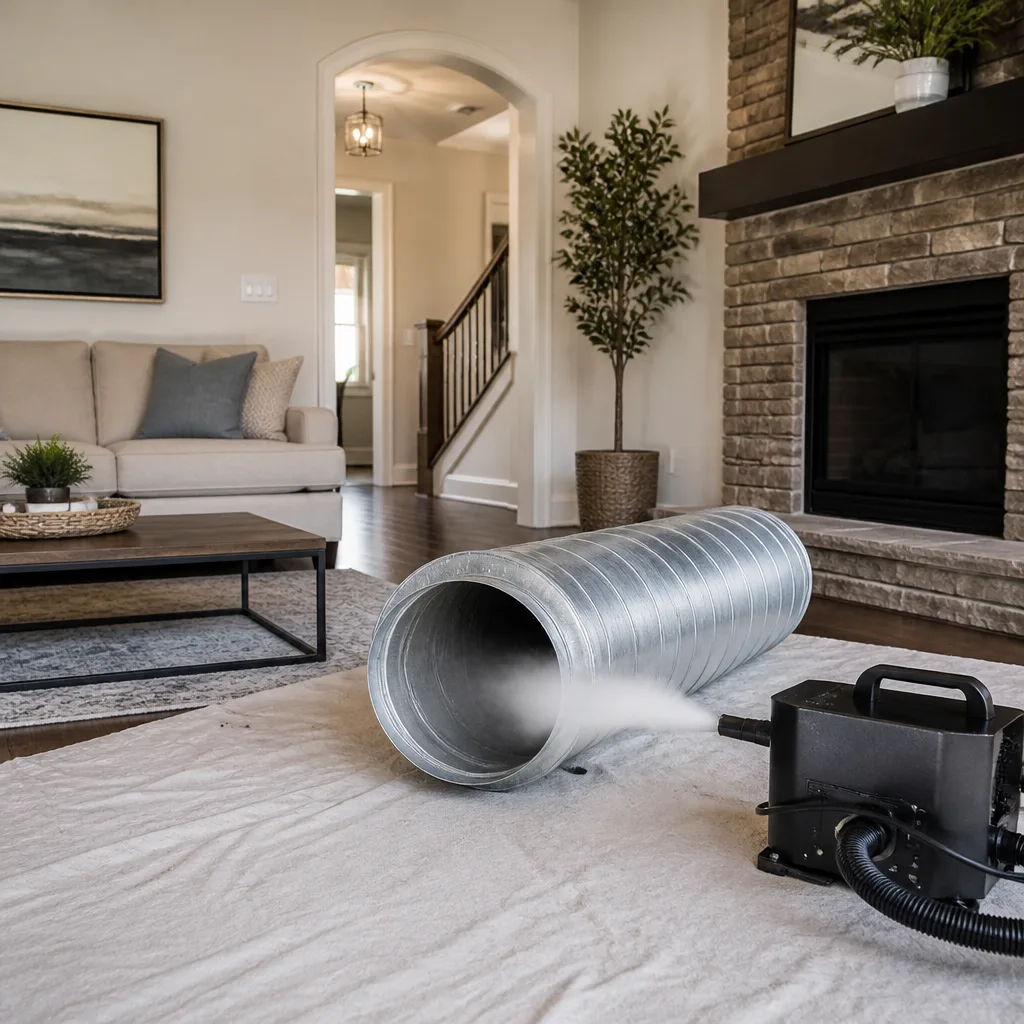 Sanitizing & deodorizing
Whole-system duct and dryer vent check with before-and-after photos - you see exactly what came out of your vents
That "$99 whole-house special" is a bait ad - the real number appears once they are in your hallway, or the "clean" is a shop-vac at the register. We photograph the inside of your ducts before and after instead.
Air Duct Cleaning Cost Breakdown: The New Bedford Homeowner’s Reference for 2026
A $199 whole-home duct cleaning quote and a $650 quote can describe the exact same house. They almost never describe the same service. The gap isn’t profit margin; it’s equipment, labor hours, and how much material actually leaves the system. Most homeowners shop duct cleaning by comparing the bottom-line number, which is like comparing two car repairs by the invoice total without asking what parts go in. In this guide we break down the real cost variables for a New Bedford home in 2026: square footage, vent count, system type, access, and what each add-on actually does. By the end you’ll be able to read a quote as a scope of work instead of a price tag.
Quick Answer
Air duct cleaning in New Bedford typically runs $350 to $650 for a standard single-family home in 2026, with larger colonials and triple-deckers pushing toward $550 to $850. The price is driven by vent count, system layout, and access difficulty, not the headline number on a flyer. A written, per-system quote that lists what gets cleaned and what equipment does the work is the only fair way to compare bids.
Styles & brands we work with
- Whole-home duct cleaning
- Dryer vent cleaning
- Camera inspection
- Sanitizing & deodorizing
Table of Contents
- Why Two Quotes for the Same House Can Differ by Hundreds
- The Cost Variables That Actually Drive Price in New Bedford
- Real 2026 Price Ranges by New Bedford Home Type
- Why Equipment Costs Change the Number on Your Quote
- Add-On Services Decoded: What’s Worth It and What’s an Upsell
- How to Read a Scope of Work and Compare Quotes Fairly
- What You Can Check Yourself Before You Call
- Common Mistakes to Avoid
Why Two Quotes for the Same House Can Differ by Hundreds
Duct cleaning bids don’t share a standard unit of measure. One company prices per vent, another prices per system, and a third quotes a flat rate that turns into an open-ended invoice once the technician is on site. That’s why two numbers for the same New Bedford cape can land $300 apart and both be technically “correct” within their own pricing model. The private middle of the market is where the confusion lives. There’s no licensing board that defines the finished product, so the finished product has to be defined in writing.
What separates legitimate quotes from each other is scope. A company that prices per vent has an incentive to count conservatively and charge more per opening. A company that prices per system has to actually assess the house before quoting. A flat-rate quote that never changes sounds good until you read the listed exclusions. The reason a $650 quote might be the better deal than a $199 quote is almost always what’s included, not what’s charged.
In our experience, the largest cost driver most homeowners overlook is the return side of the system. Supply vents are visible and easy to count. Returns are often larger, more awkward, and harder to reach, and some low-bid companies quietly skip them. Ask specifically whether returns are included in the number you’re quoted. For a fuller picture of what proper cleaning involves, see air duct cleaning.
The Cost Variables That Actually Drive Price in New Bedford
Five things move the price of a duct cleaning job more than anything else. If you can estimate these before calling, you can usually predict where a quote will land.
- Home square footage. A 1,200-square-foot ranch and a 2,600-square-foot colonial don’t have the same duct footage, even if the visible vent count looks similar.
- Supply and return vent count. Every opening takes time to clean and verify. Ten vents is a different job than twenty.
- System type. Forced-air systems are the standard. Older homes in New Bedford’s historic districts sometimes still run on gravity or transitional ductwork, which changes how equipment can be applied.
- Access difficulty. Basements with finished ceilings, knee walls, and tight crawl spaces add labor. So does ductwork that’s been modified or added on over many decades.
- Condition on arrival. Heavy debris loads, evidence of moisture, or pest intrusion turn a routine cleaning into a multi-stage job.
New Bedford adds one more variable that doesn’t show up in every market: the age of the housing stock. A lot of properties here have had ductwork spliced, extended, or re-routed by several generations of contractors. That’s not automatically a problem, but it does mean a technician has to spend real time tracing the layout before quoting accurately. A quote given without looking at the system is a guess.
Whatever the quote, insist it’s written down before work starts. One flat price per system, agreed in advance, is the standard we hold ourselves to, and it’s the standard every legitimate company should meet. For the New Bedford area specifically, a technician who has worked older housing stock will quote more accurately than one who hasn’t.
Real 2026 Price Ranges by New Bedford Home Type
These are typical whole-system ranges for New Bedford in 2026. They include standard cleaning of supply and return vents and main trunk lines. The exact price is set by the written estimate after a technician walks the system, and unusual access or condition can push a job above the range.
- Ranch, 1,000 – 1,400 sq ft, 8 – 12 vents: $350 – $500. Simplest layout. Single-level duct runs mean less climbing and fewer hard-to-reach junctions.
- Cape, 1,400 – 1,800 sq ft, 12 – 16 vents: $420 – $600. Second-floor runs over unconditioned attic space often add time and require careful access.
- Colonial, 1,800 – 2,600 sq ft, 16 – 22 vents: $550 – $850. Multiple zones, longer trunk runs, and often more complex basement routing.
- Triple-decker, three units, 20 – 30 vents total: $700 – $1,200. Each unit is essentially its own system. Two or three stacks may need separate setups, which adds labor.
Triple-deckers are a New Bedford specific. The city has a long tradition of three-family homes, and duct cleaning in a triple-decker is not the same as cleaning a single-family system with the same total square footage. The systems are physically separate. A technician has to set up negative pressure at each one and route a vacuum line where the equipment can reach. That takes more time, more hose, and more labor hours. Anyone quoting a triple-decker at the single-family rate is either guessing or planning to skip something.
If you want the full breakdown of what the cleaning itself involves, the Duct Cleaning New Bedford overview walks through each phase of the process. The number in the range above isn’t the interesting part. What matters is what the technician does during the hours that number represents.
Why Equipment Costs Change the Number on Your Quote
Two things separate a $199 quote from a $650 quote: what equipment is on site and how much time the technician spends. The machinery that does the job right is more expensive to buy, more expensive to run, and slower than the portable units used on low-bid jobs. That cost has to appear somewhere in the price. It’s not padding. It’s the reason the job works.
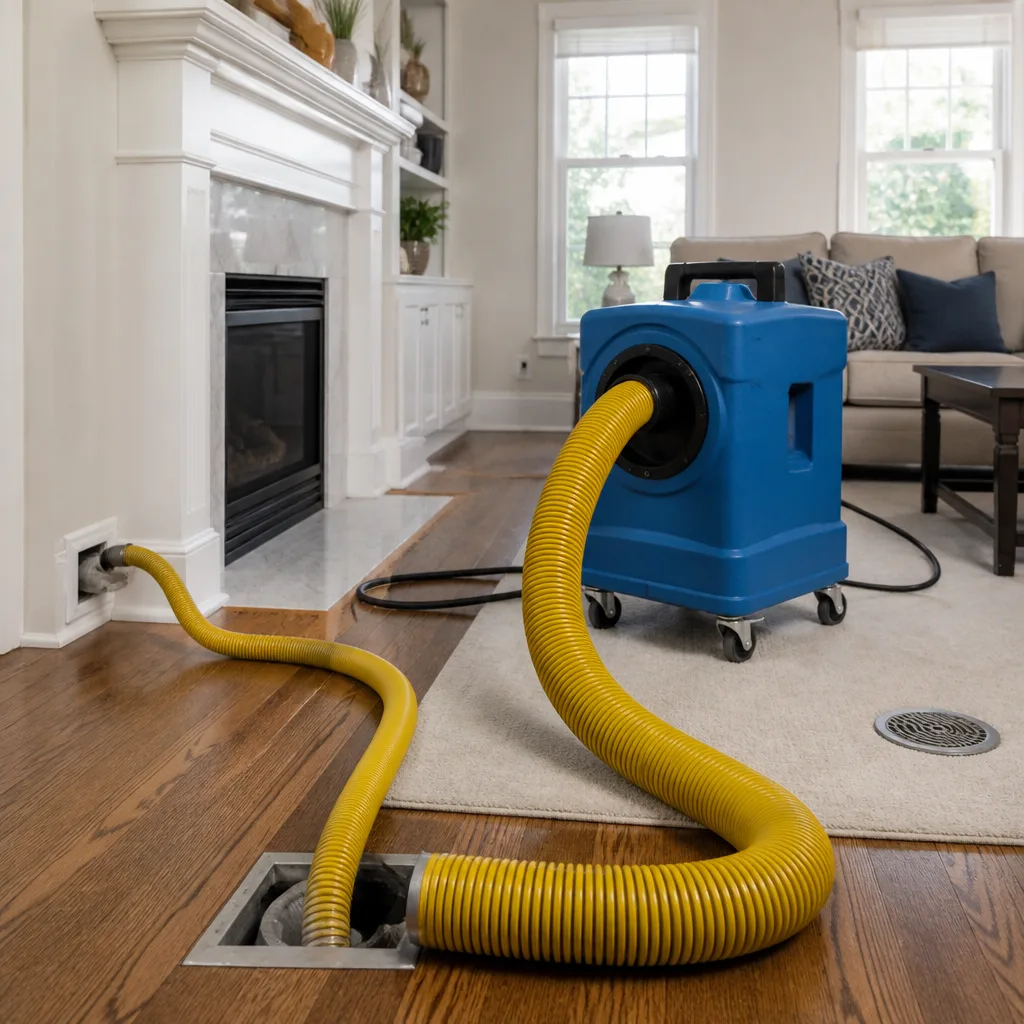
Professional duct cleaning uses mechanical, negative-pressure systems that agitate the inside of the duct while keeping the entire system under vacuum. Rotobrush and Nikro are the two brands professional remediation contractors rely on. Both are true contractor rigs, not consumer-grade vacuums with a long hose. Abatement Technologies equipment is used on jobs where indoor air quality concerns go beyond routine dust, including situations where containment matters. We’ve built our process around Rotobrush and Nikro because they’re what actually removes the debris from the duct. A shop vac does not.
What this means for your quote comes down to one question you should ask every company you consider: what equipment will be on site? If the answer is vague, the number is too. A low-bid quote, in our experience, almost always traces back to portable equipment and a hose run to one floor. That setup leaves debris in the trunk lines and in the return side of the system, and no amount of photos at the end will change what’s still inside the walls.
Add-On Services Decoded: What’s Worth It and What’s an Upsell
Add-ons are where duct cleaning pricing gets murkiest. Some are genuinely necessary for indoor air quality. Others are products pitched on fear. Here’s how to tell them apart.
Sanitizing and antimicrobial treatments
Worth it when there’s an actual finding: visible biological growth, a recent moisture event, or persistent odor with no other explanation. Not worth it as a default addition to every cleaning. A cleaning that removes the debris is usually the solution. If a technician says you need sanitizing before ever looking inside the system, treat that as a sales script.
Dryer vent cleaning
A standalone safety service, not a duct cleaning add-on. Dryer vents are the leading cause of residential fires in the U.S. per the NFPA, and most duct cleaners either don’t offer the service or subcontract it. We treat it as a separate job because it involves different equipment and a different failure mode. If you’re booking duct cleaning, also ask whether dryer vent cleaning is available from the same team.
Duct sealing
Worth it when the system leaks. A joint that’s come apart behind a wall or under a floor pushes conditioned air into a crawl space instead of a room. Sealing those gaps can be worthwhile, but only after someone has actually checked for leaks. A “duct sealing” line item added without inspection is guesswork.
Mold remediation
Only worth it if there’s confirmed mold growth inside the system and a moisture source behind it. Cleaning mold without fixing the moisture is temporary. We’re a duct specialist, not a mold remediation company, so we’ll tell you plainly when a scenario is outside our scope and refer you to the right trade.
Whole-home air quality components are a different category. If a technician recommends a whole-house filter or humidifier, it should come with a brand and a model number. We work with Honeywell and Aprilaire product lines because they’re the standard parts for these integrations and because they last. If the recommendation is a generic “air scrubber,” ask what it actually is.
How to Read a Scope of Work and Compare Quotes Fairly
The single most useful thing you can do to avoid a bad duct cleaning experience is insist on a written scope of work. That document is what makes two quotes comparable. Without it, you’re comparing the number at the bottom of the page, and the number tells you almost nothing.
A proper scope contains all of the following. Missing items are a reason to ask questions.
- Which vents are included. Supply and return, with a count for each. If only supplies are listed, the returns are probably being skipped.
- What happens to the trunk lines. Main runs versus branch runs. Some low-bid quotes clean branches and leave the trunk.
- Equipment being used. The specific equipment, named. “Professional-grade vacuum” is not specific.
- Duration. A real whole-home cleaning takes hours on a typical New Bedford home. A quote that says the job takes 45 minutes for a 2,000-square-foot house isn’t cleaning, it’s a surface pass.
- Before-and-after photos. Of your system, not stock images from a manufacturer.
- Written price. One flat price per system, agreed before work starts. No per-vent surprises, no “while we’re in there” add-ons unless they’re spelled out.
- What’s excluded. What the quote doesn’t cover is as important as what it does.
If you ask for a scope of work and the answer is “we’ll just take care of it,” that’s your answer. The written estimate is the product. The work is just delivery. You can also ask for the estimate in writing before committing, and we offer free estimates on (844) 793-0706.
What You Can Check Yourself Before You Call
You don’t need to know how to clean ducts to know whether you need the service. A few simple observations can tell you whether a technician should be walking your system, and roughly what kind of job it’ll be.
- Remove a floor register and look inside with a flashlight. A light dust film is normal. Heavy buildup, debris, or visible pest activity is a sign the system hasn’t been cleaned in a long time.
- Check your HVAC filter. If a fresh filter turns dark within a month, a lot of particulate matter is flowing through the system.
- Notice dust patterns. Dust collecting on horizontal surfaces in every room within days of cleaning is a sign of debris being reintroduced from the duct system.
- Listen for rattles or whistles. Loose joints, disconnected runs, or a duct that’s come apart can be identified by the sound. Repair is a different job than cleaning, and the two often go together.
- Look at your dryer vent outlet outside. If lint is visible at the terminal, the vent is overdue for cleaning. That’s a safety issue, not a comfort one.
None of this is a diagnosis. It’s information you can bring to the call so the estimate you get is closer to accurate. A technician with proper equipment can confirm what’s actually happening in the system in under an hour.
Common Mistakes to Avoid
- Hiring on headline price alone. A $199 quote and a $650 quote are not competing bids if they describe different work. Compare the scope, not the number.
- Not asking whether returns are included. A lot of low-bid companies clean only the supplies. Returns are where the debris settles. Always confirm both sides of the system are on the quote.
- Assuming every technician uses the same equipment. Portable units and contractor-grade rigs are not equivalent. Ask what equipment will be on site, and expect an actual brand name.
- Agreeing to per-vent pricing after the work starts. If the number moves while the technician is on site, the pricing model was never agreed. Get one flat price per system before the first tool comes out.
- Booking the add-ons without a reason. Sanitizing and mold treatment should follow a finding, not a sales pitch. If they’re offered before inspection, they’re upsells.
- Skipping the dryer vent because it feels like a separate thing. In a typical New Bedford triple-decker, dryer vents are long, with multiple 90-degree elbows, and they clog faster than the manufacturer rating suggests. Treat them as a safety service, not a comfort upgrade.
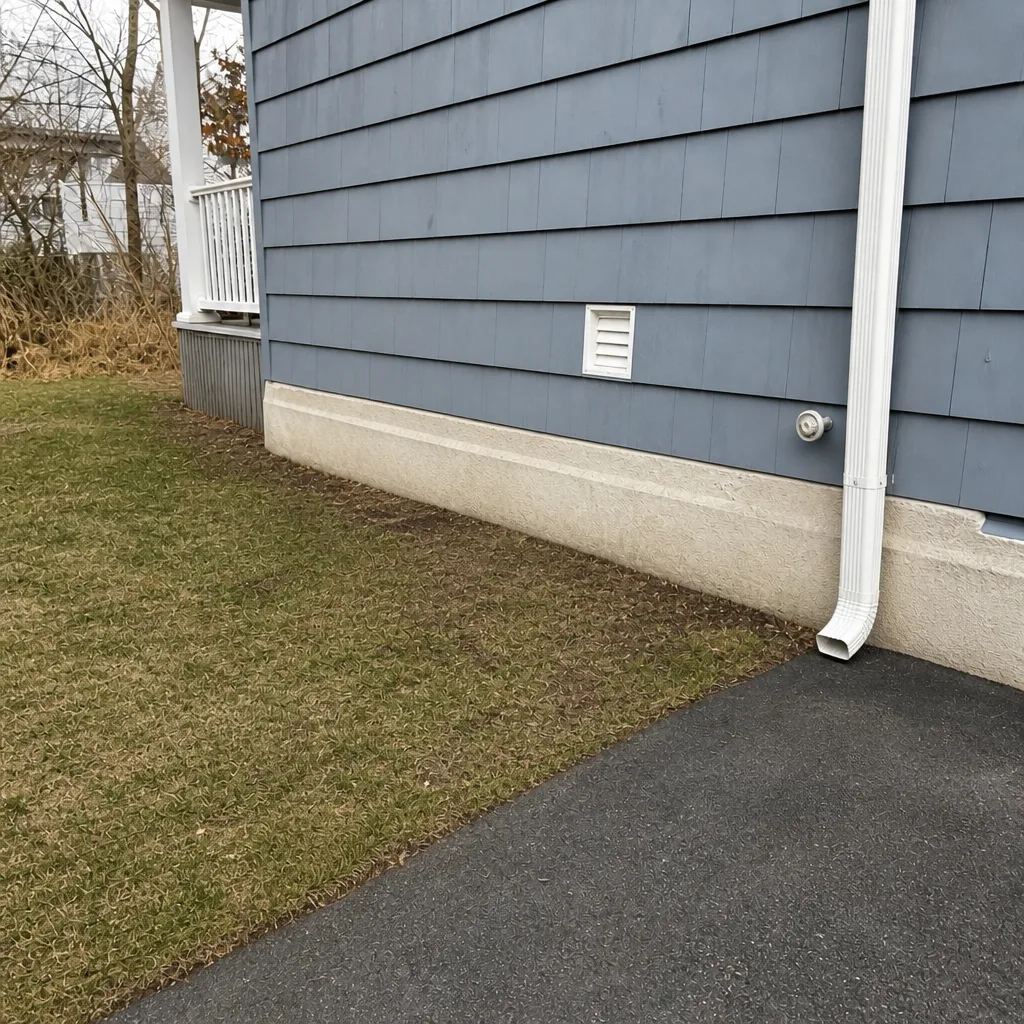
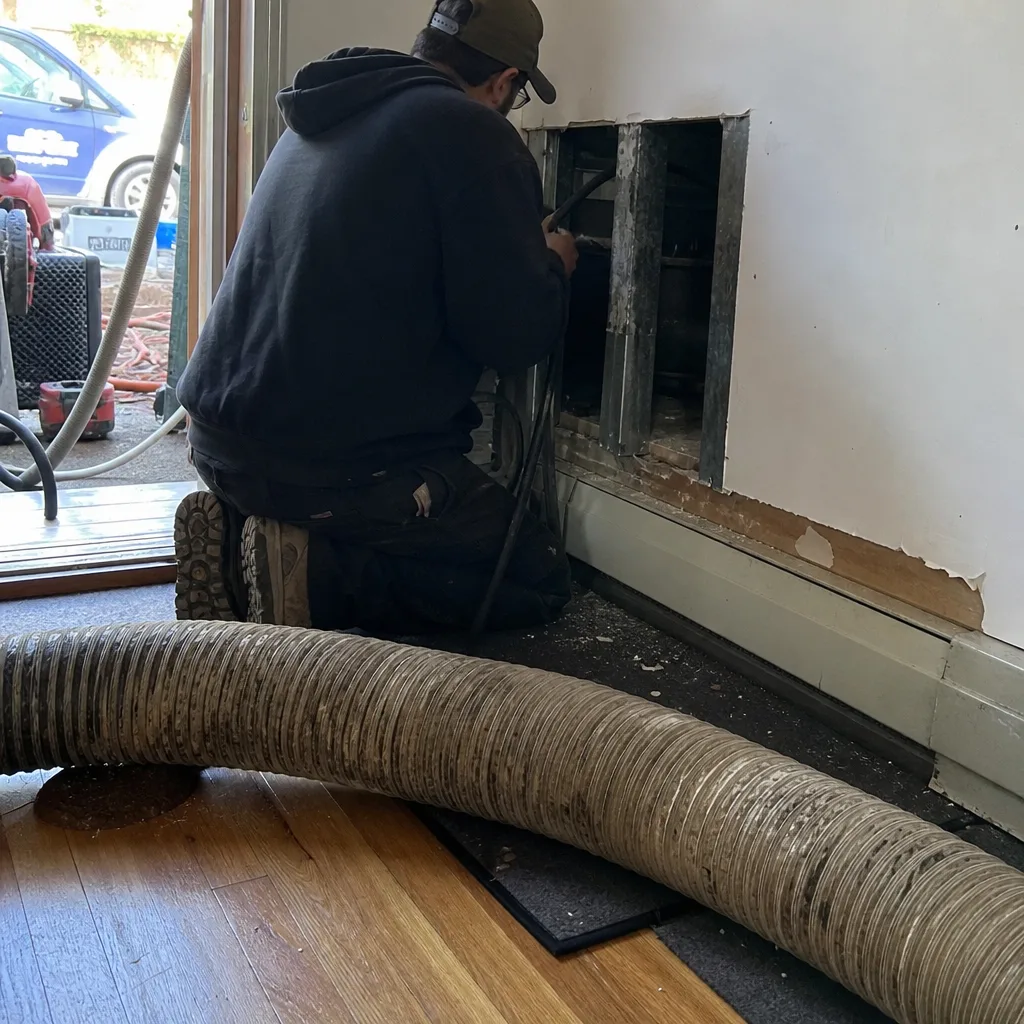
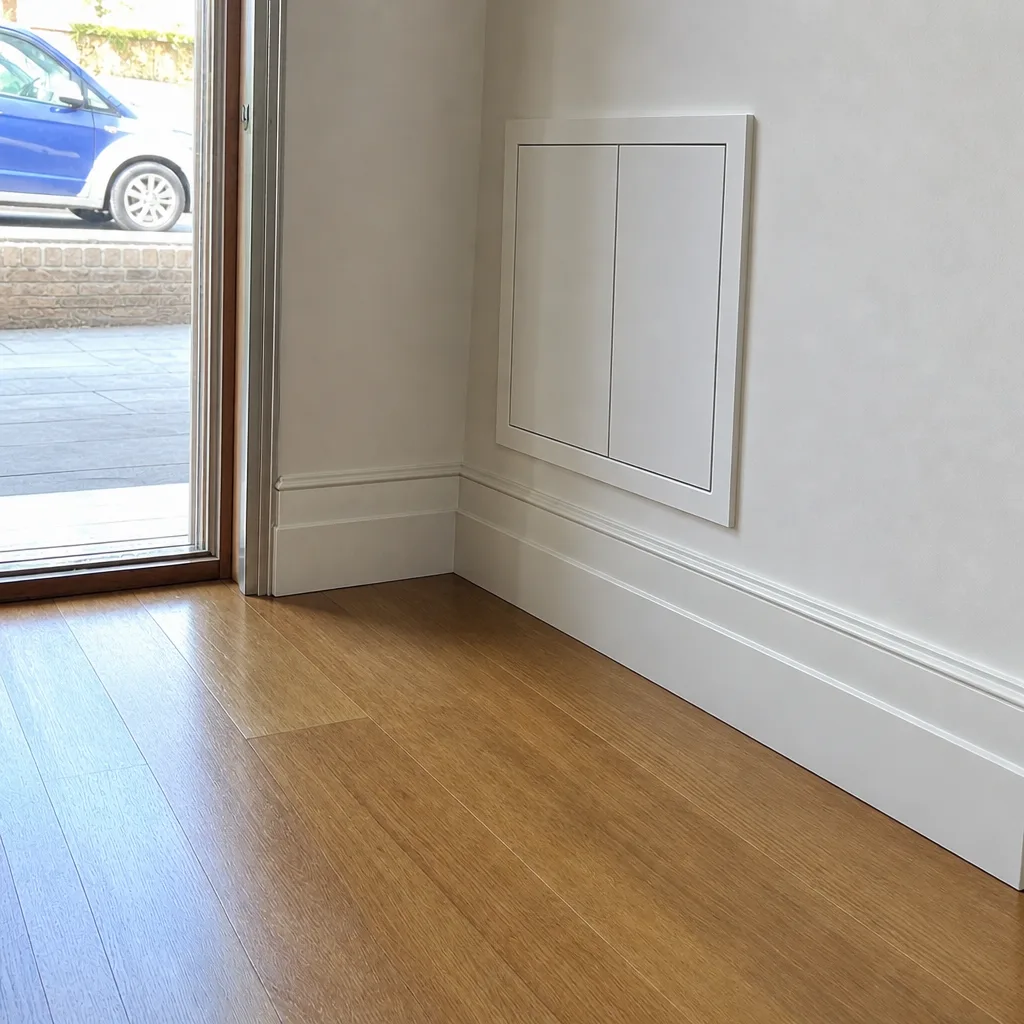
- Not asking for before-and-after photos. Without photos of your own ducts, there’s no way to verify the work was done as quoted.
See the difference
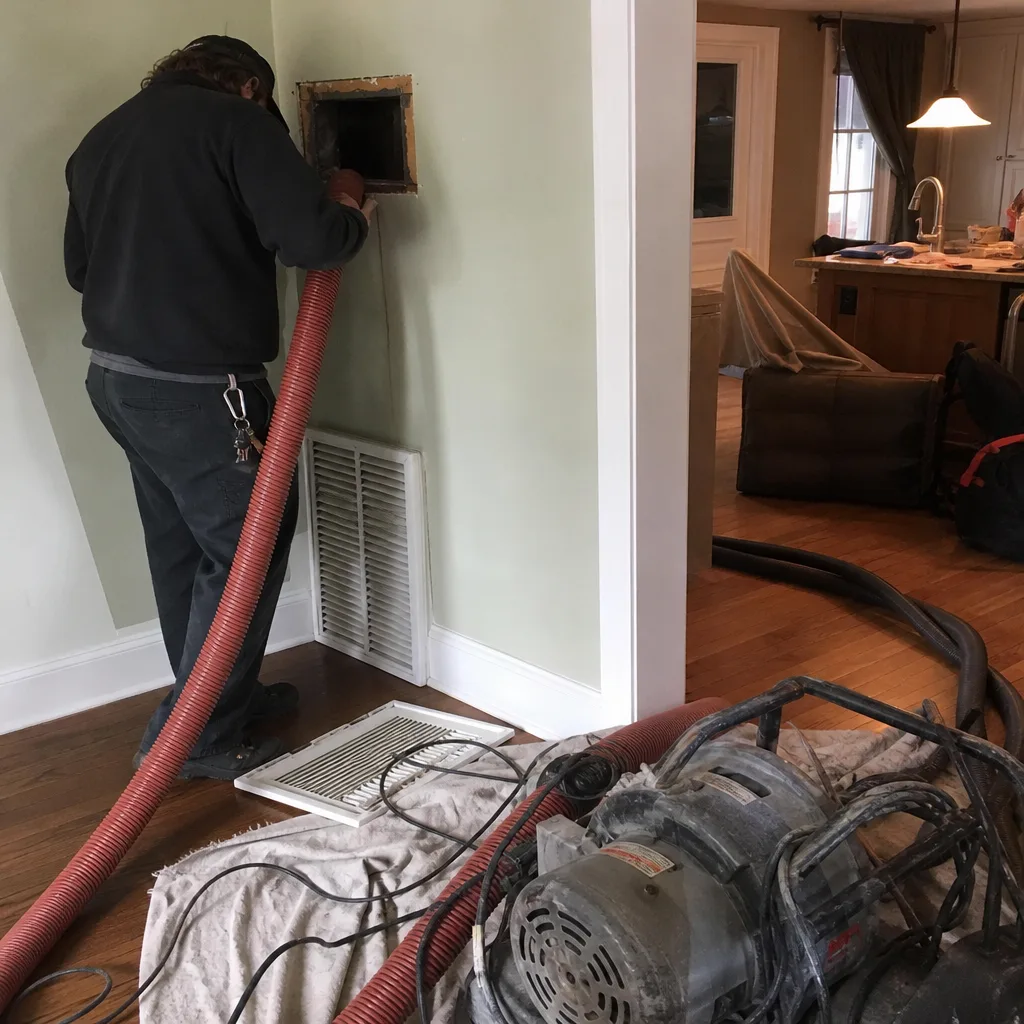 Before
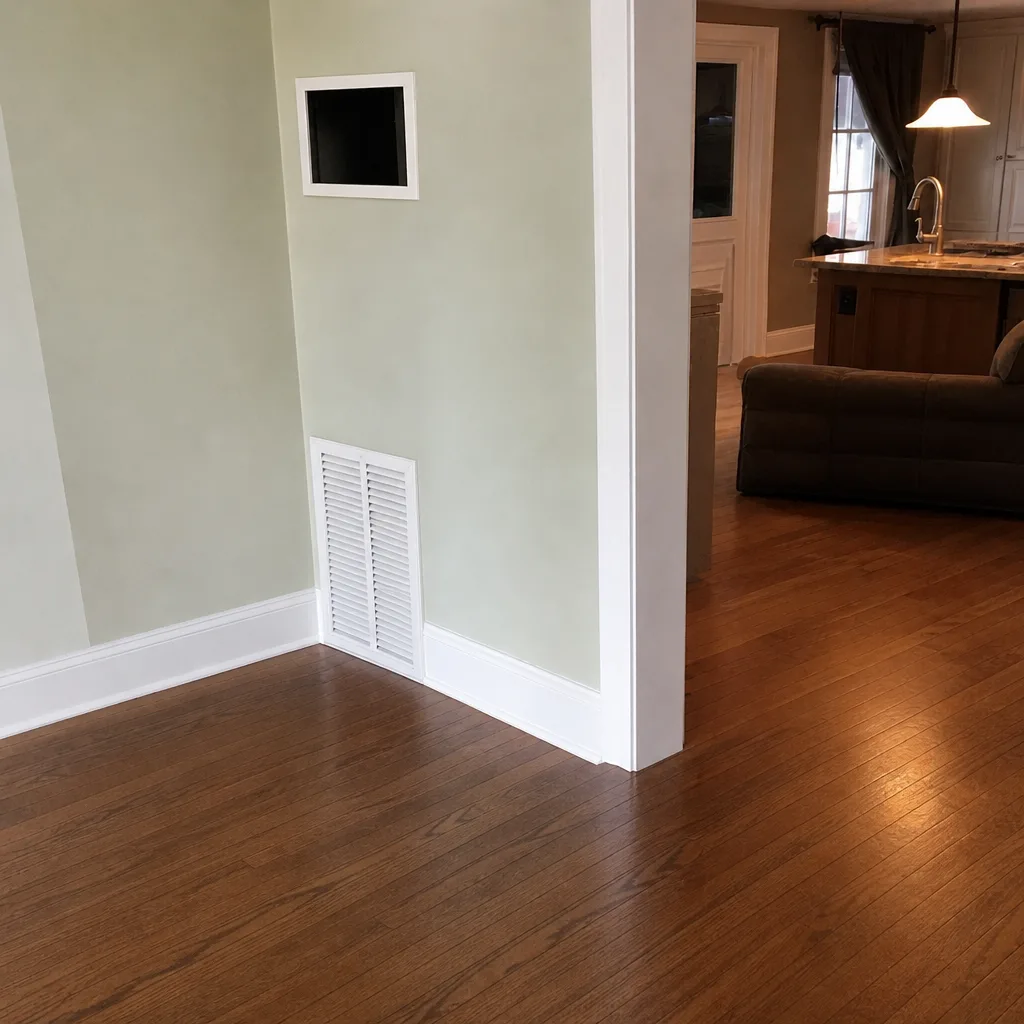 After
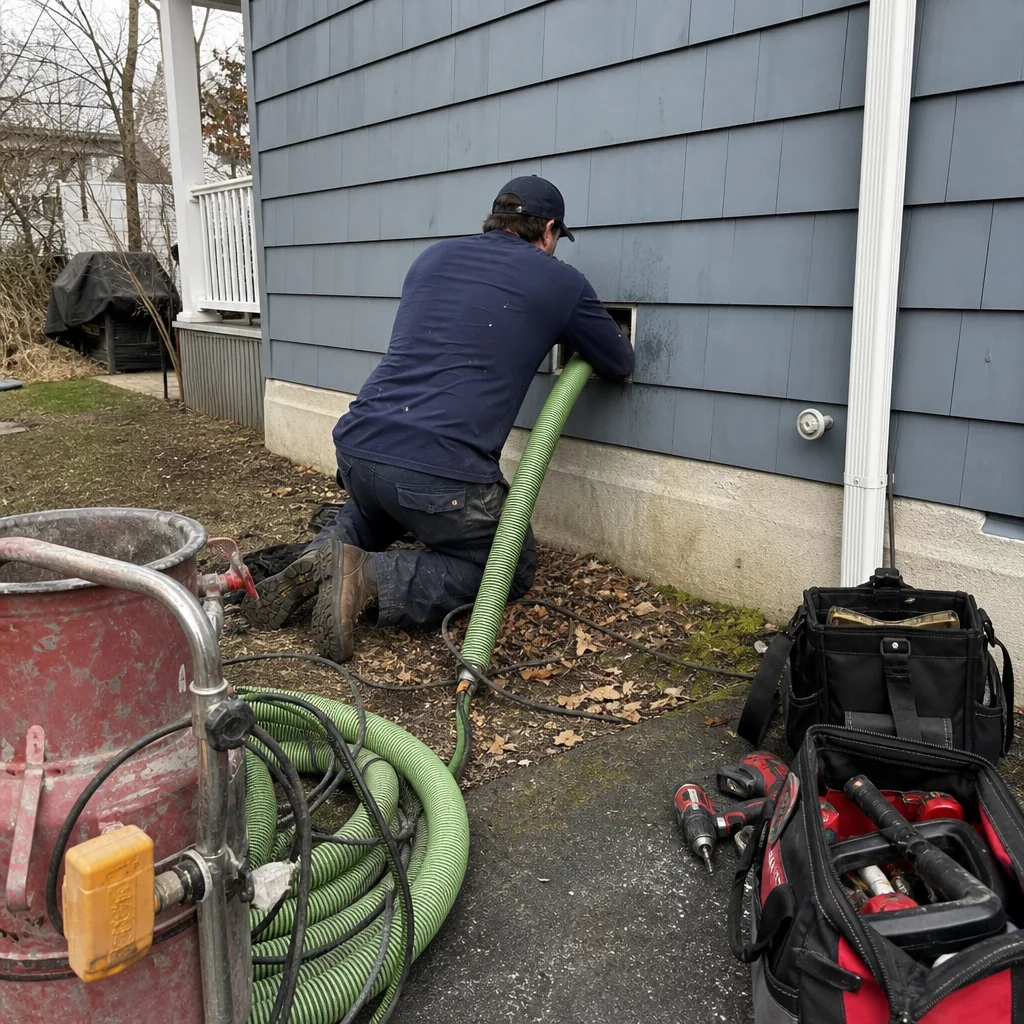 Before
 After
 Before
 After
When to Call a Professional
Most duct cleaning is scheduled maintenance, but a handful of situations call for an expert rather than a quick check. If you’ve recently bought a home with an unknown service history, that’s the classic case for a first cleaning and inspection. If you have persistent allergy symptoms that don’t change when you change your HVAC filter, a duct inspection will tell you what the filter can’t. If your dryer takes more than one cycle to dry a normal load, or the exterior vent flap doesn’t close cleanly, that’s a safety concern. If you suspect a duct has come apart behind a wall, don’t wait to schedule. Duct Cleaning New Bedford offers free estimates in New Bedford. Call (844) 793-0706 to schedule a walk-through. We answer 24/7. Fast dispatch from 7am to 7pm, Sunday through Friday.
Frequently Asked Questions
Typical 2026 ranges in New Bedford are $350 to $650 for a standard single-family home and $550 to $850 for a larger colonial, with triple-deckers running higher because they contain multiple separate systems. The exact price is set by the written estimate after a technician inspects the system. Call (844) 793-0706 for an exact quote; estimates are free.
Cheap quotes usually reflect smaller equipment, shorter labor time, or skipped scope. A $199 quote on a 2,000-square-foot New Bedford home is almost never a whole-system cleaning with professional equipment; it’s a portable unit run to one floor, often with the return side left off the work order. Ask what equipment is on site and whether returns are included. Call (844) 793-0706 if you’d like a written estimate to compare.
Before-and-after photos of your own ducts, taken by the technician and shown to you before payment, are the standard way to verify a duct cleaning. Ask up front whether photos are included. A written scope that lists vents by count and photos of the actual system are what make the work verifiable. Call (844) 793-0706 to schedule an estimate.
Every three to five years is a reasonable baseline for most homes, sooner if you’ve recently renovated, have pets, or moved into a house with an unknown service history. Homes with continuous allergy concerns often schedule more frequently. Every scenario is different; call (844) 793-0706 for a walk-through to see what your system actually needs.
Usually not. Standard homeowners policies cover duct cleaning only when it’s tied to a specific covered loss, like a water event that affects the HVAC system. Confirm with your own insurer. If a cleaning is part of a repair, ask your carrier how they want the work documented. Call (844) 793-0706 for an estimate and we can work with your insurer on documentation.
Cleaning removes debris from a functional system. Repair addresses compromised ductwork: disconnected joints, crushed runs, leaks, and sections that have come apart inside a wall or floor cavity. Cleaning alone won’t fix a broken duct, and a full repair quote is a separate scope of work. If you’re not sure which you need, call (844) 793-0706 for an inspection.
The Bottom Line
The 2026 numbers for air duct cleaning in New Bedford range from roughly $350 for a small ranch to over $1,000 for a triple-decker with multiple separate systems, and the reason those ranges exist is the scope behind them, not the profit margin of the company on the other end of the phone. The way to keep the process honest is to demand a written scope of work that lists supply and return vents, names the equipment, includes before-and-after photos, and holds one flat price per system. Any company that hesitates to put that in writing is telling you something about the service.
Contact
If you’d like a walk-through and a written estimate for your New Bedford home, call Duct Cleaning New Bedford at (844) 793-0706. We answer 24/7. Fast dispatch from 7am to 7pm, Sunday through Friday. Estimates are free, and the price is set per system by the written estimate before any work starts.
Written by the team at Duct Cleaning New Bedford.