
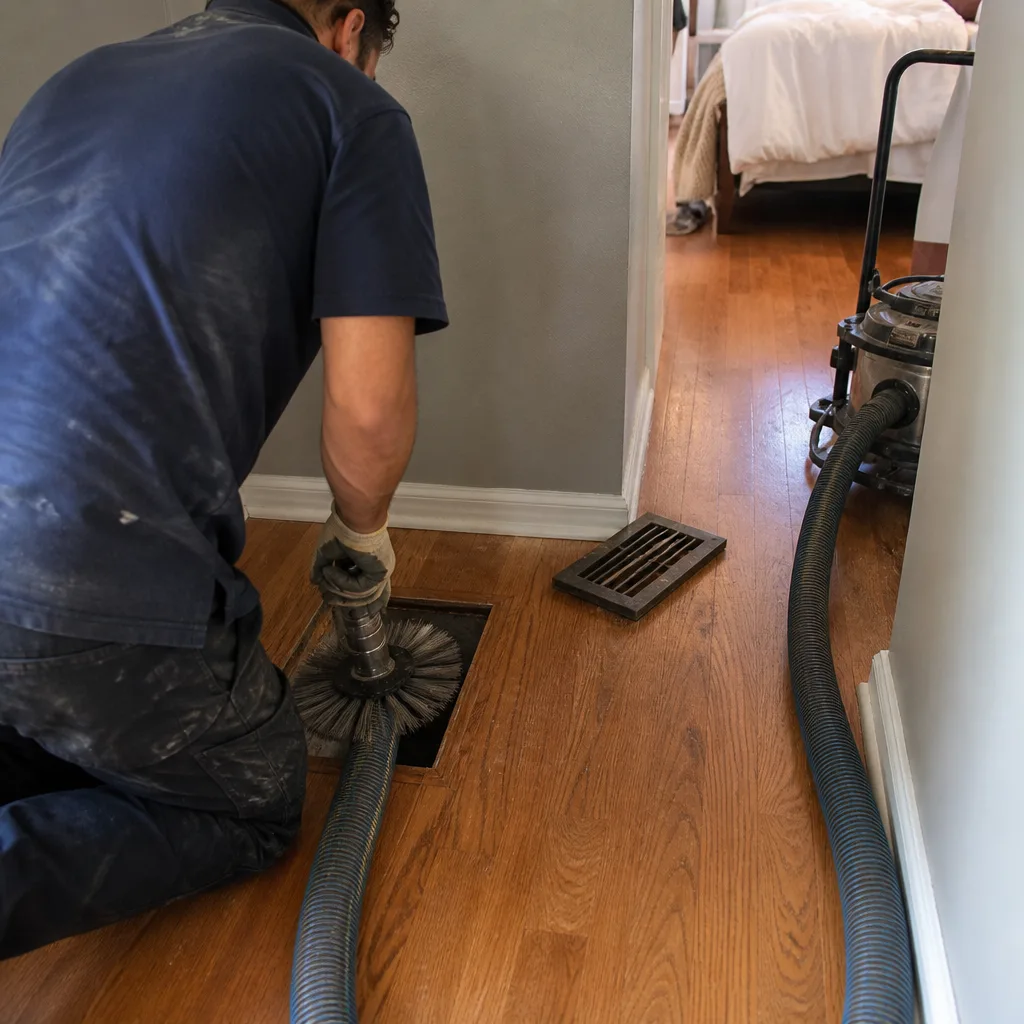
Last updated November 15, 2026
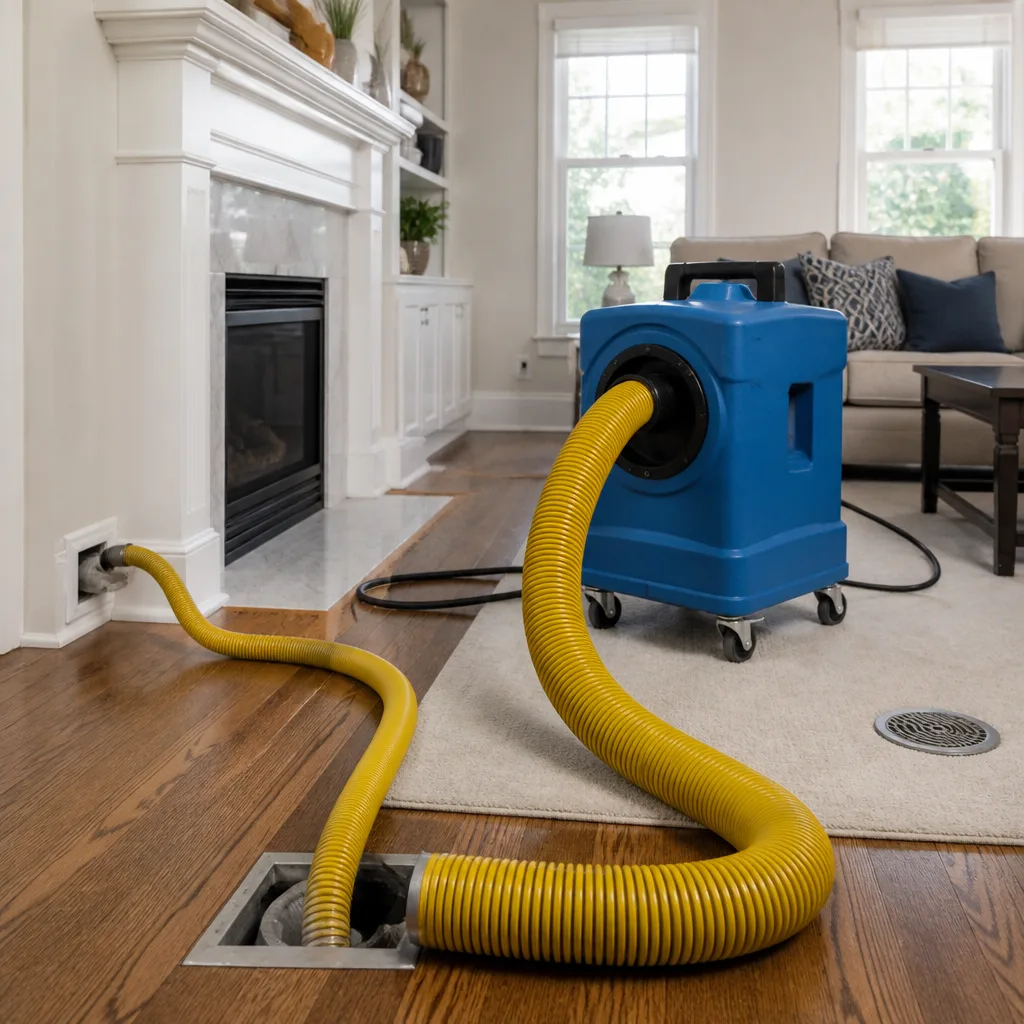 Whole-home duct cleaning
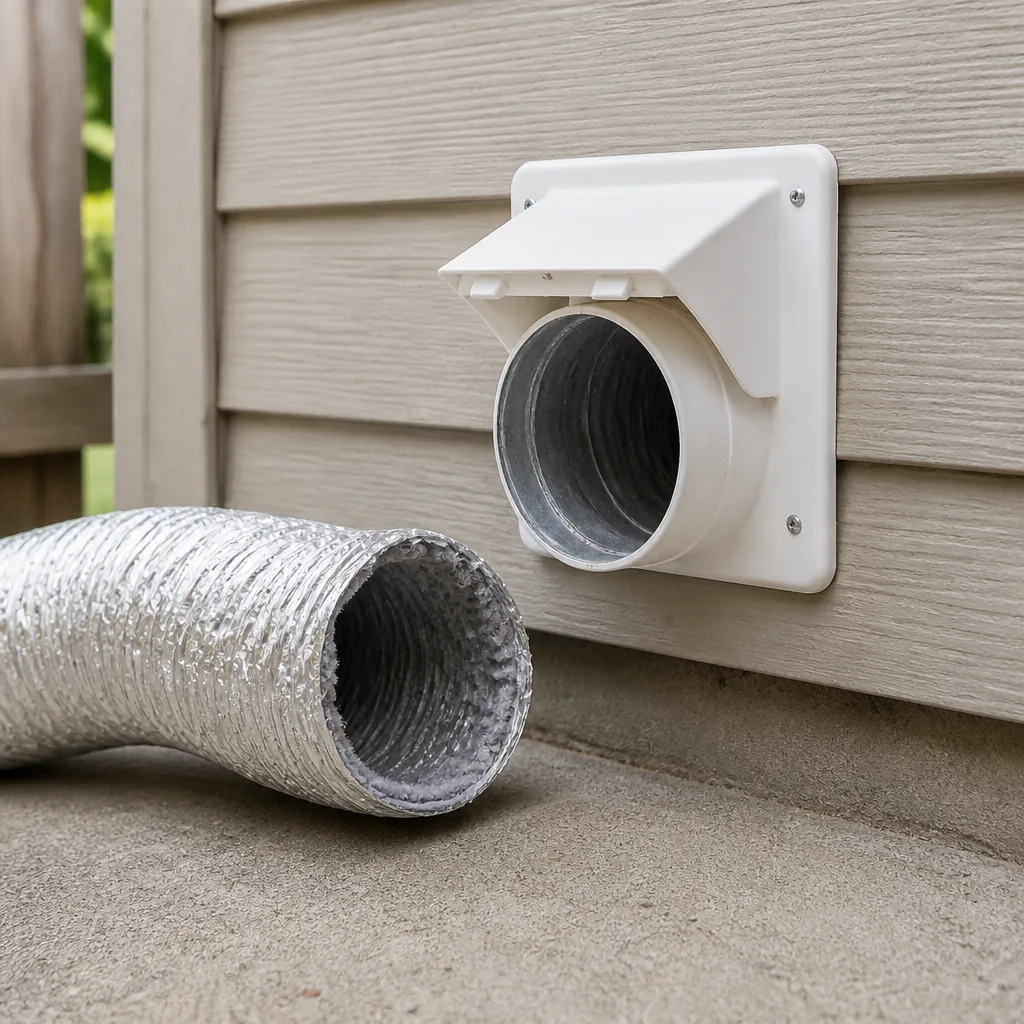 Dryer vent cleaning
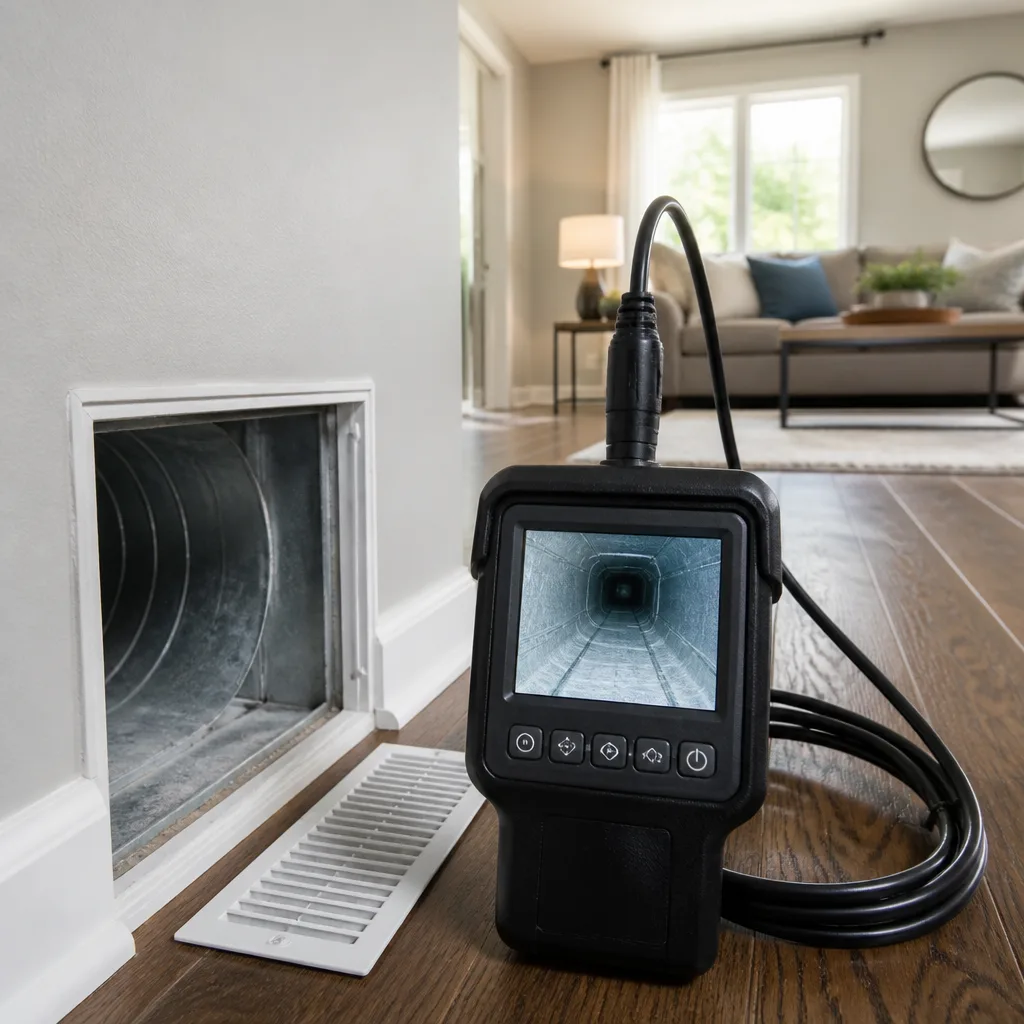 Camera inspection
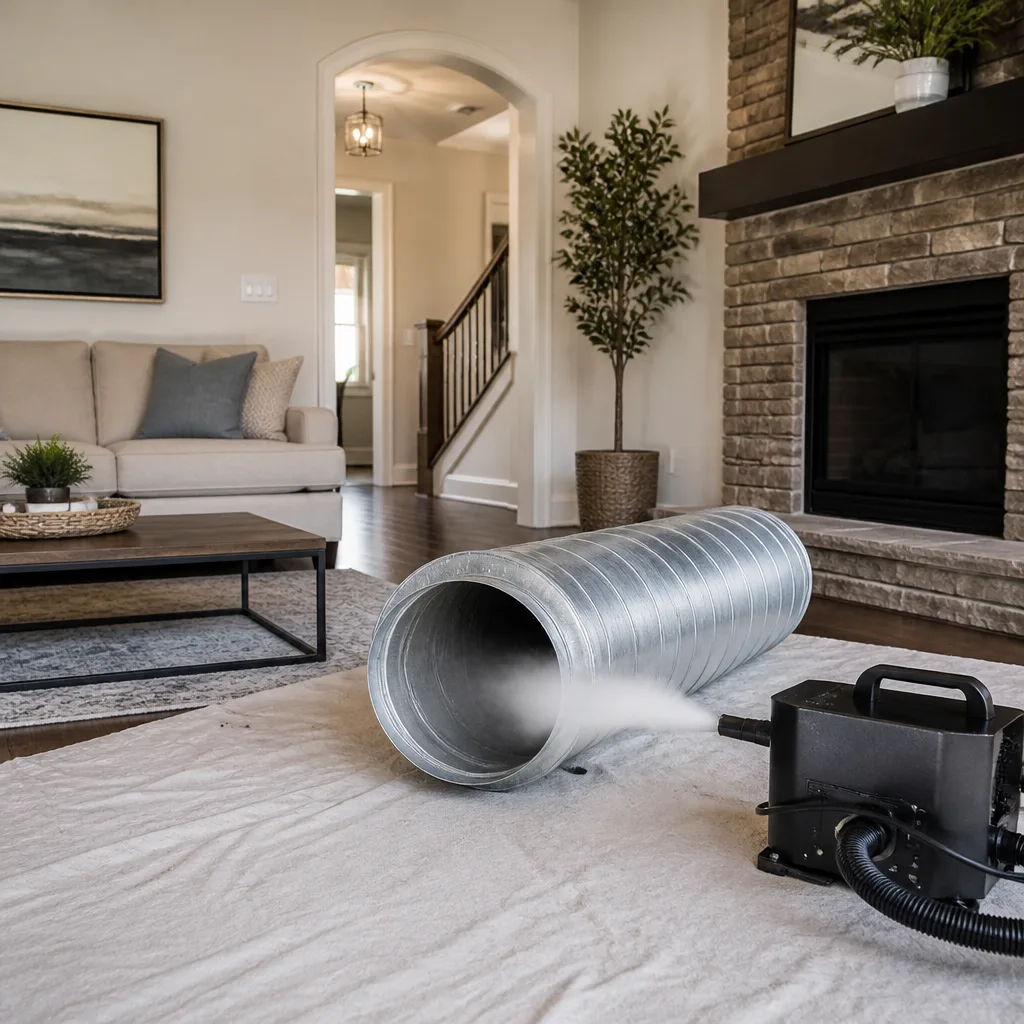 Sanitizing & deodorizing
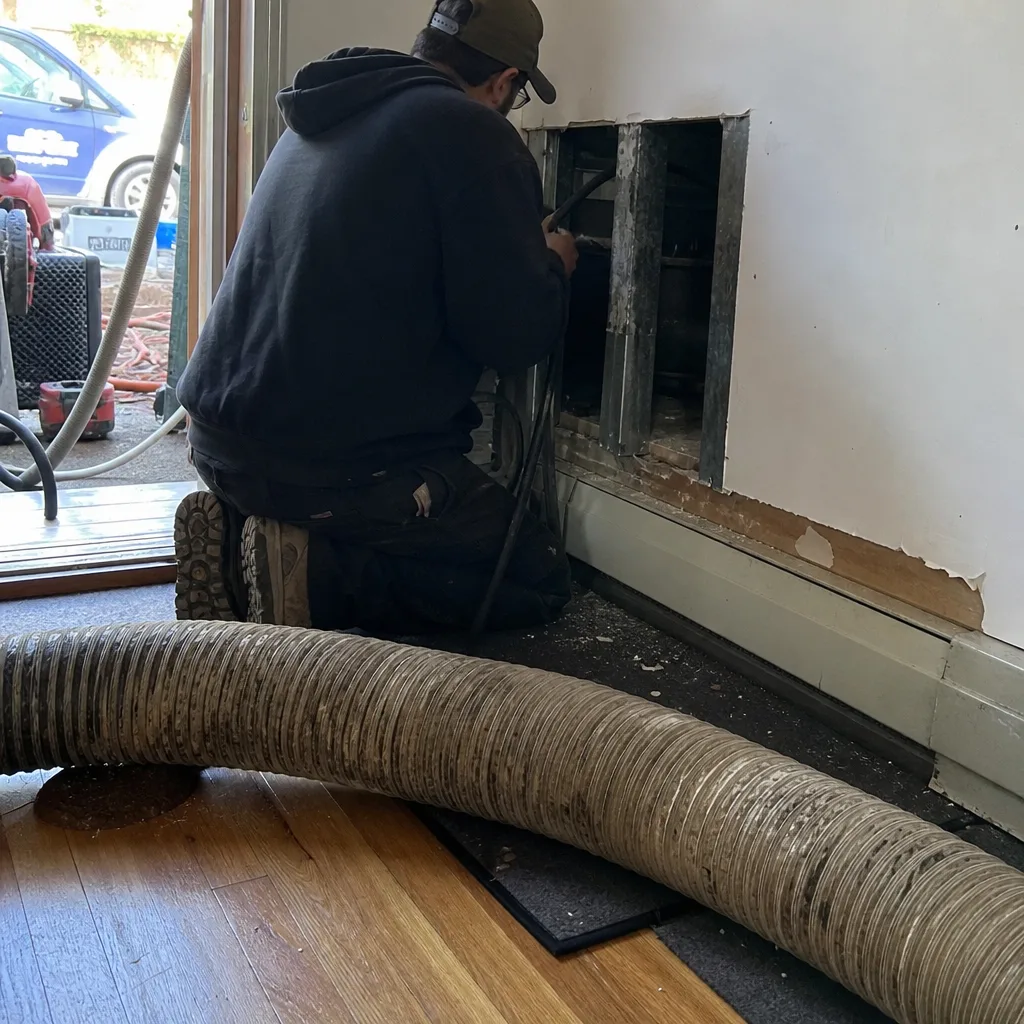
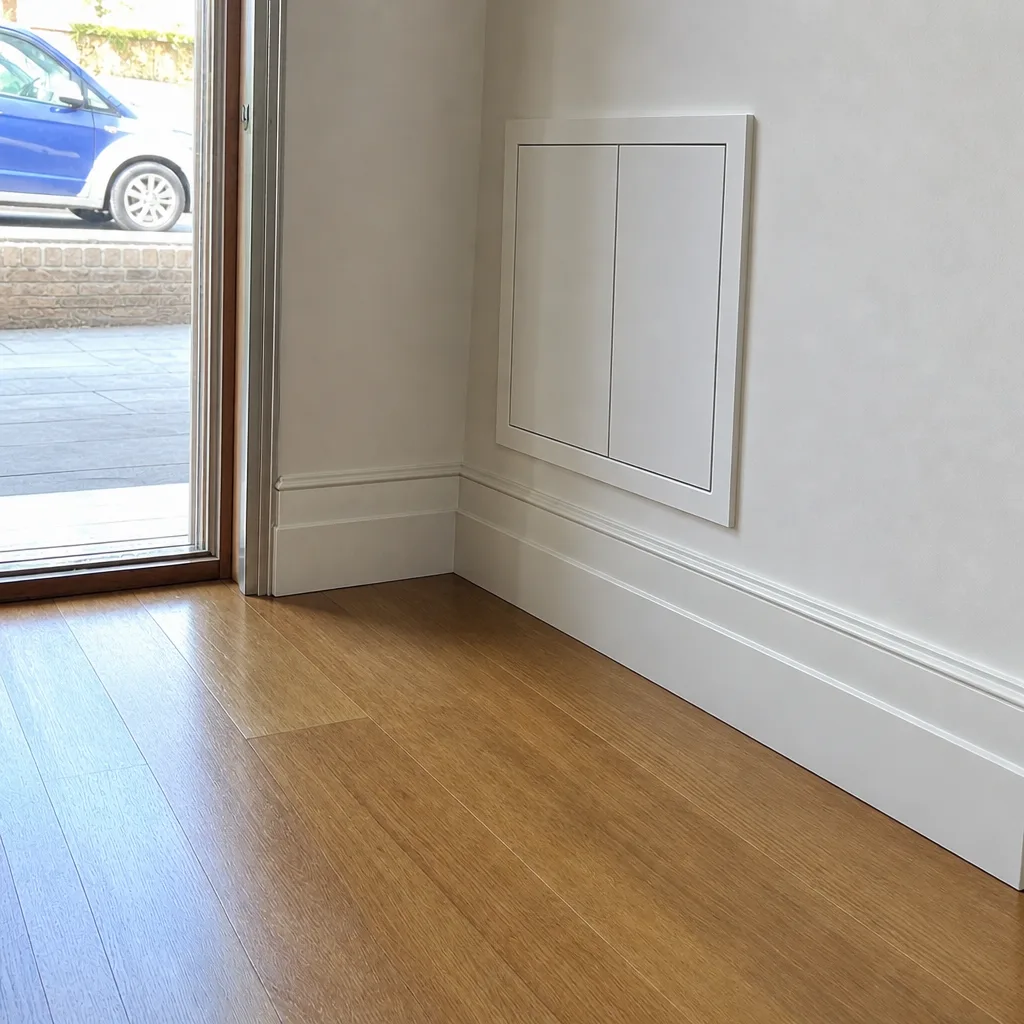
Whole-system duct and dryer vent check with before-and-after photos - you see exactly what came out of your vents
That "$99 whole-house special" is a bait ad - the real number appears once they are in your hallway, or the "clean" is a shop-vac at the register. We photograph the inside of your ducts before and after instead.
Air Duct Cleaning Permits, Codes & Inspections in New Bedford, MA: What You Need to Know
Most homeowners assume duct work sits outside the building code entirely. Cleaning is maintenance, the thinking goes, so nobody needs to sign anything or pull anything. That holds true right up until a technician cuts out a length of crushed flex duct and ties in a new run. At that moment the job stops being cleaning and becomes mechanical work under the Massachusetts building code, and the paperwork question changes with it. This guide maps exactly where that line sits in New Bedford, what the local building department actually cares about, and how unpermitted duct work surfaces at resale.
Quick Answer
Routine air duct cleaning in New Bedford does not require a permit. Duct repair, replacement, or rerouting is mechanical work under 780 CMR, and a permit may be required depending on the scope. Home inspectors flag unpermitted duct modifications at resale, so the safe rule is to confirm the permit question before any repair work begins, not after.
Styles & brands we work with
- Whole-home duct cleaning
- Dryer vent cleaning
- Camera inspection
- Sanitizing & deodorizing
Table of Contents
- Cleaning vs. Repair: Where Massachusetts Draws the Line
- What 780 CMR Says About Duct Work
- When the New Bedford Building Department Gets Involved
- Multi-Family Buildings and Shared Mechanical Systems
- How Unpermitted Duct Work Shows Up on a Home Inspection
- What a Contractor’s Scope of Work Should Say
- Duct Cleaning and Asbestos Rules in Pre-1980 Homes
- A Pre-Job Checklist for New Bedford Homeowners
Cleaning vs. Repair: Where Massachusetts Draws the Line
The single most useful distinction in this whole topic is the one almost nobody explains before work starts. Cleaning removes accumulated dust, debris, and contaminants from inside a duct system that stays structurally as it was. Repair changes the system. That’s the threshold.
Under the Massachusetts State Building Code, 780 CMR, mechanical work that alters a duct system falls into a different category than maintenance. A technician running a Rotobrush whip through a trunk line and pulling debris into a negative-pressure collection unit is performing maintenance. A technician cutting out a collapsed section of flex duct, replacing a failed plenum connection, or sealing joints with mastic is performing mechanical work. The first rarely triggers a permit. The second sometimes does, and the answer depends on scope and on how your local inspector reads it.
What counts as cleaning
- Mechanical agitation of duct interiors with rotary brush or air whip equipment
- Negative-pressure collection and HEPA filtration of dislodged debris
- Cleaning of registers, grilles, and diffusers
- Sanitizing applications inside existing duct runs
- Dryer vent cleaning, which is a separate maintenance task entirely
What counts as repair
- Replacing a section of flex duct or rigid duct
- Reconnecting a duct that has separated at a joint or boot
- Sealing duct joints and seams with mastic or approved tape as a system repair
- Rerouting ductwork to improve airflow or correct a design problem
- Plenum repair or replacement at the air handler connection
- Adding or removing a supply or return run
In our experience, the confusion happens most often when a homeowner books cleaning and the technician finds something broken. A crushed flex run behind a finished ceiling, a boot that’s pulled away from the floor, a trunk line with failed seam tape. The honest move is to stop, explain what was found, and treat the repair as a separate scope with its own permit question. If a company rolls the repair into the cleaning invoice without mentioning it, that’s a flag worth paying attention to.
What 780 CMR Says About Duct Work
780 CMR is the Massachusetts State Building Code, and it adopts the International Mechanical Code as its mechanical chapter with amendments. The practical upshot for duct work is this: alterations to a mechanical system require a permit unless a specific exemption applies. Maintenance and repair of existing systems in kind are commonly exempted, but replacement and new installation generally are not.
The word “in kind” matters. Replacing a damaged section of duct with the same size and routing is usually viewed as repair. Changing the size, the routing, or the number of runs is an alteration. That’s the difference between a repair that might not need a permit and one that almost certainly does.
Why the code language is deliberately general
Building codes are written to cover a whole state, not one city’s housing stock. New Bedford has a large share of older housing, much of it converted and reworked over many decades. A code section that says “mechanical alterations require a permit” gets interpreted by whoever is standing at the counter on the day the question is asked. That’s not a flaw in the code. It’s how local enforcement works.
What this means for you: the only reliable answer to “does my duct repair need a permit” comes from the authority having jurisdiction, which in New Bedford is the city’s building department. Not a contractor’s guess, not a forum post, not a general rule of thumb.
Contractor licensing separately from permits
Permits and licensing are two different questions. A permit is approval to do specific work on a specific property. Licensing is the state credential that allows a contractor to perform that category of work at all. Massachusetts regulates this through the Office of Consumer Affairs and Business Regulation, and homeowners can verify a contractor’s registration before signing anything. Ask for the registration number and check it. This is standard practice and no legitimate contractor minds the question.
When the New Bedford Building Department Gets Involved
The City of New Bedford’s building department is the authority having jurisdiction for permit questions on residential and light-commercial duct work inside city limits. Where they get involved most often is on the repair side, not the cleaning side, and usually in a few recognizable situations.
- Duct replacement during a larger renovation. If duct work is part of a kitchen remodel, a basement finish, or a heating system swap, it gets folded into the renovation permit scope.
- Rerouting ductwork to solve an airflow complaint. Changing the layout of a duct system is an alteration, and alterations get reviewed.
- Work discovered during a home sale inspection. A buyer’s inspector flags it, the seller has to address it, and permit status becomes part of the negotiation.
- Multi-family buildings with shared mechanical systems. Anything touching a system serving more than one unit crosses into a different review lane.
- Post-fire or post-water-damage reconstruction. Duct replacement as part of a larger rebuild is almost always permitted work.
The call itself is quick. A homeowner or a contractor can describe the scope to the building department and get a straight answer on whether a permit is required and what the filing looks like. Doing this before work starts costs a phone call. Doing it after means either retroactive permitting or disclosing unpermitted work to a buyer.
What the filing usually involves
When a permit is required for duct work, the filing typically includes a scope description, a simple plan or sketch of what’s changing, and the contractor’s credentials. Inspections happen at rough-in and final stages. The exact requirements come from the building department, so the homeowner’s job is to confirm what’s needed rather than assume. If a contractor tells you a permit isn’t needed for a duct replacement without ever asking what the replacement involves, that’s worth a second question.
Multi-Family Buildings and Shared Mechanical Systems
New Bedford has a lot of two- and three-family housing, much of it built as worker housing and reworked many times since. That housing stock creates permit situations that single-family homeowners never encounter.
When a duct system serves more than one dwelling unit, or when a repair touches the mechanical infrastructure shared between units, the work crosses out of routine maintenance territory fast. A furnace serving several units through a common trunk is not the same as a furnace serving one unit. Repairs on shared systems generally require permits, and often require coordination with the other unit owners or the property manager.
The condominium wrinkle
Condominium ownership adds a document layer on top of the code layer. The master deed and the association’s rules define what counts as a limited common element and who has authority to approve work affecting shared mechanical systems. Before any duct repair in a condo unit, the owner should read the association documents and get written approval if the work touches anything outside their unit’s exclusive boundaries.
Dryer vent cleaning and repair in multi-family buildings is another common trigger. Shared dryer vent runs in older buildings can be long, convoluted, and prone to lint accumulation. When those runs need repair or rerouting, it’s a building-level decision rather than a unit-level one. That’s one reason we treat dryer vent cleaning as its own scope rather than an add-on.
How Unpermitted Duct Work Shows Up on a Home Inspection
Home inspectors are trained to look at mechanical systems, and duct work is part of that scan. What they find often isn’t a code violation in the dramatic sense. It’s work that doesn’t match what the permitting record shows for the property.
What inspectors actually notice
- Duct material that doesn’t match the vintage of the surrounding system
- Joints sealed with materials that look improvised rather than standard
- Support strapping that doesn’t follow conventional spacing
- Runs that terminate oddly or connect to spaces without a clear supply or return
- Disconnects at boots and plenums that indicate recent work
Individually, none of these proves anything. Together, they prompt the inspector to note “evidence of recent mechanical work, permit status unknown.” That single sentence in a report has a way of turning into a request for documentation from the buyer’s attorney.
What it costs the seller at closing
The cost isn’t a fixed number. It’s the cost of resolving the question, which ranges from producing a permit record to pulling a retroactive permit to opening up a finished ceiling so an inspector can see the work. Sellers often end up crediting the buyer for the uncertainty even when the work was done correctly, simply because the paperwork doesn’t exist. The cleanest path is to have the paperwork before the house goes on the market.
For buyers, the inverse applies. When an inspection flags duct modifications, ask for the permit record. If there isn’t one, factor the resolution into the negotiation rather than discovering it after closing.
What a Contractor’s Scope of Work Should Say
This is where homeowners get the most protection for the least effort. A written scope of work should make clear which parts of the job are cleaning and which parts are repair, and should say plainly whether a permit applies to the repair portion.
What a good scope includes
- A separate line for cleaning. Number of systems, number of supply and return runs, equipment used, and whether sanitizing is included.
- A separate line for any repair. What’s being replaced or reconnected, the materials, and the location in the system.
- The permit statement. Either “no permit required for this scope” with a reason, or “permit will be pulled by us” with the filing information.
- Before-and-after photos. Photos of the actual ducts being cleaned, not stock images. This is the single best proof that the work happened as described.
- The price, stated as one number per system. Not per vent, not per run, not a coupon figure that grows once the technician is inside.
- Licensing and insurance confirmation. Registration number and proof of coverage, both verifiable.
When we write a scope, we separate cleaning from repair on purpose. We clean it, and if it’s broken, we fix it, and those are two different conversations. A homeowner should never be surprised to learn the job they booked as cleaning was actually a repair that should have been permitted.
Duct Cleaning and Asbestos Rules in Pre-1980 Homes
A large share of New Bedford’s housing stock predates 1980. Some of that housing contains duct insulation, joint tape, or plenum materials that may contain asbestos. This is a regulatory category entirely separate from building permits, and it’s the one homeowners ask about least and should ask about most.
Massachusetts regulates asbestos work under the Department of Labor Standards, and the rules are specific about what constitutes a disturbance. Routine cleaning that doesn’t disturb suspect materials may proceed. Work that cuts, tears, grinds, or removes suspect material does not, and requires a licensed asbestos abatement contractor and proper notification.
What to do before work starts
- Identify the age of the duct system and any insulation around it
- If the material is suspect and will be disturbed, arrange for testing before any cutting begins
- Ask the contractor directly how they handle suspect materials and what their stop-work procedure is
- If abatement is required, it’s a separate licensed scope and not something a duct cleaning company should be doing
The right answer from a duct specialist on a pre-1980 home is not “we’ll be careful.” It’s a clear explanation of what gets disturbed in the planned scope and what happens if suspect material turns up mid-job. We stop, we document, and we don’t proceed until the material is tested. That’s the only defensible approach on older housing.
A Pre-Job Checklist for New Bedford Homeowners
Run through this before you sign anything, whether the job is a straight cleaning or includes repair.
- Ask the scope question first. “Is any part of this a repair or replacement?” If the answer is yes, ask about permits.
- Confirm the contractor’s registration through the state’s verification tool.
- Request a written estimate with cleaning and repair priced separately, per system.
- Ask for the equipment list. A Rotobrush or Nikro system tells you the crew is set up for source removal rather than a shop vac and a hose.
- Ask how suspect materials are handled if your home predates 1980.
- For multi-family or condo, check the association documents before any work on shared systems.
- Confirm before-and-after photos are part of the deliverable. Not a marketing promise, a documented one.
The broader point of this guide is that air duct cleaning is straightforward maintenance and almost never triggers a permit. The permit question belongs to the repair side. Knowing which side of that line your job sits on is the whole game. For a full picture of how the work itself is handled across New Bedford, our service overview covers the process from inspection to final photos.
Common Mistakes to Avoid
- Assuming “no permit” means “no rules.” A permit isn’t required for cleaning, but licensing, insurance, and asbestos rules still apply. Skipping the verification step because no permit is needed is how homeowners end up with uninsured work on their property.
- Letting a repair ride on a cleaning invoice. If a technician finds broken duct work and quietly fixes it without discussing scope or permits, the homeowner has no record of what changed. Ask for the repair to be documented separately, every time.
- Accepting a per-vent price. Per-vent pricing rewards the crew for counting vents and punishes nobody for skipping the trunk lines. Whole-system, one-flat-price quotes are the standard that protects you.
- Skipping the asbestos question on a pre-1980 home. New Bedford has a lot of older housing with original duct materials. If the job will disturb anything suspect, get it tested before the work begins, not after.
- Ignoring the condominium documents. Duct work affecting shared mechanical systems in a condo requires association approval regardless of what the code says. The association has authority over limited common elements.
- Thinking a home inspector won’t notice. Mismatched duct material, improvised joint sealing, and recent disconnects get flagged in inspection reports. Having permit paperwork upfront avoids the negotiation entirely.
- Hiring on price alone without checking equipment. A quote built on consumer-grade vacuums isn’t the same job as one built on contractor-grade negative-pressure equipment. The difference shows up in what’s left behind in the ducts.
See the difference
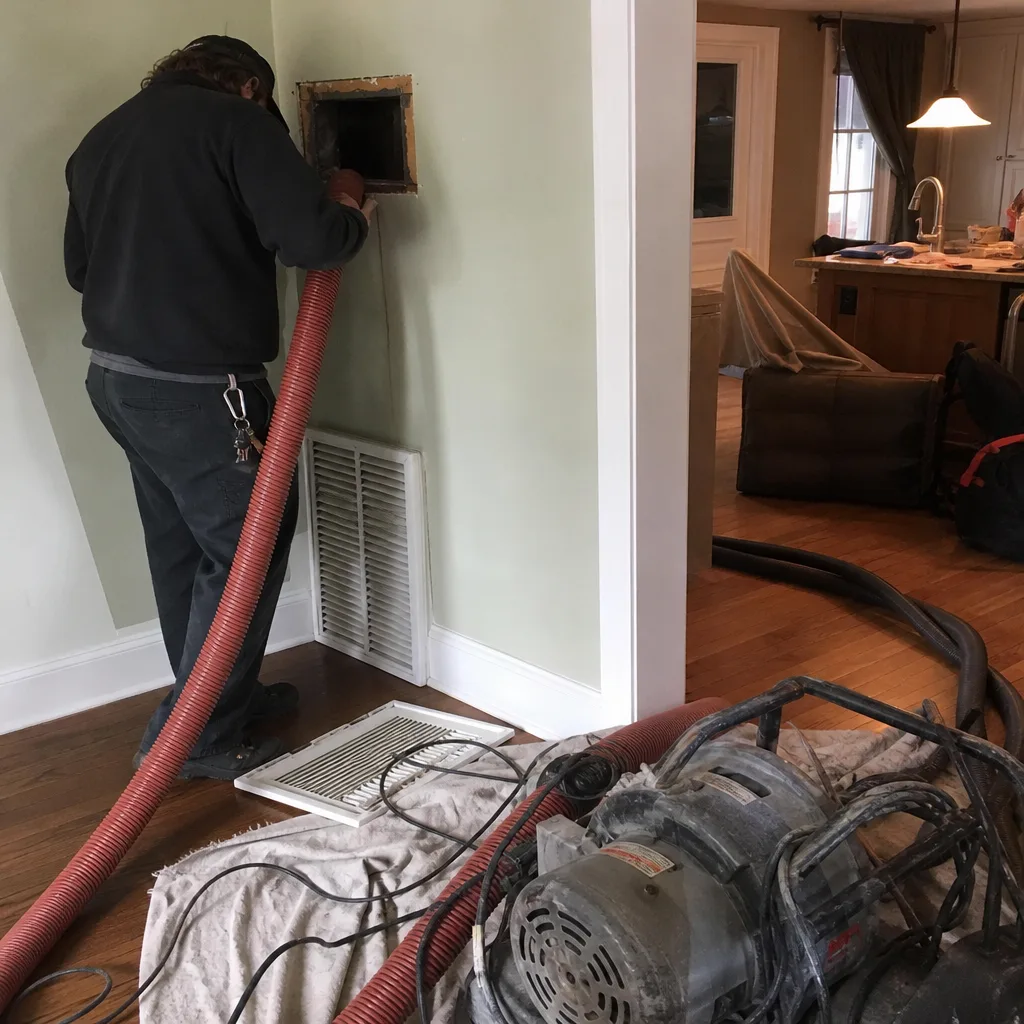 Before
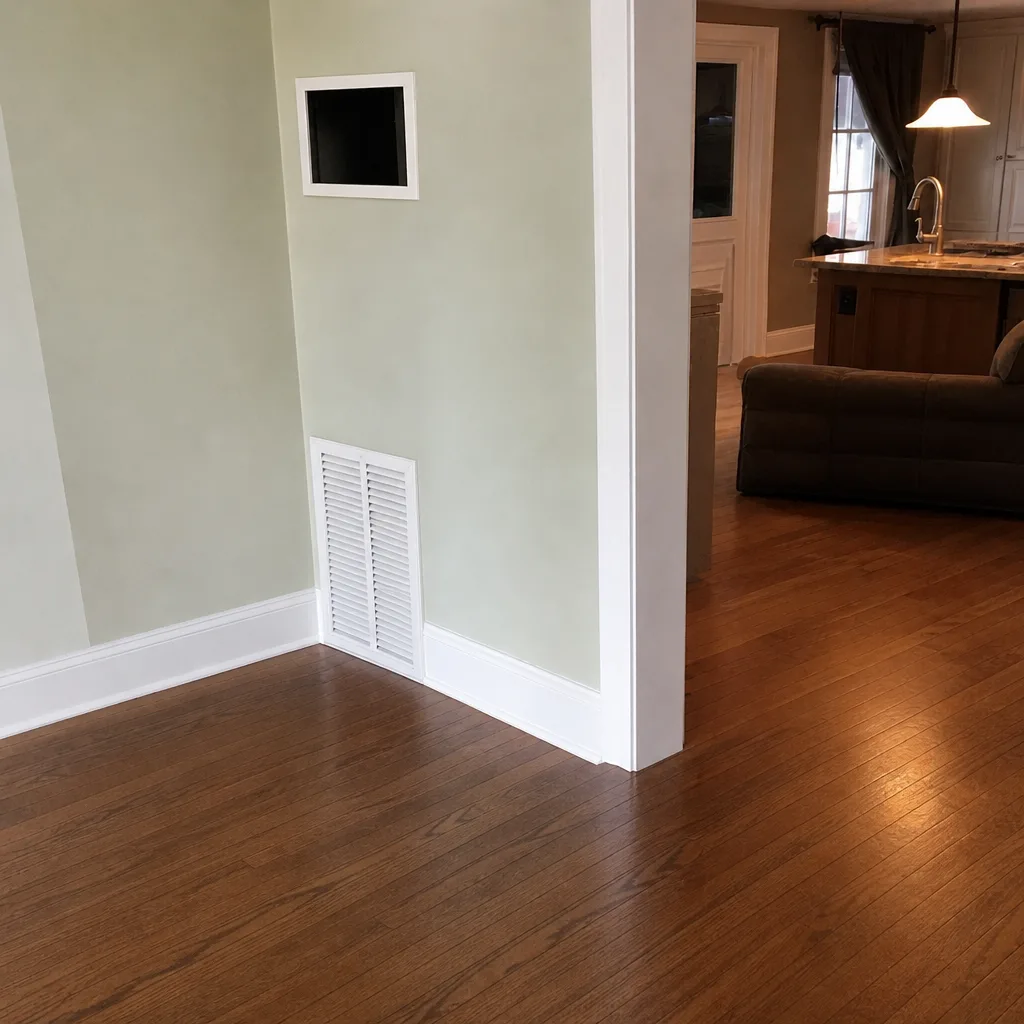 After
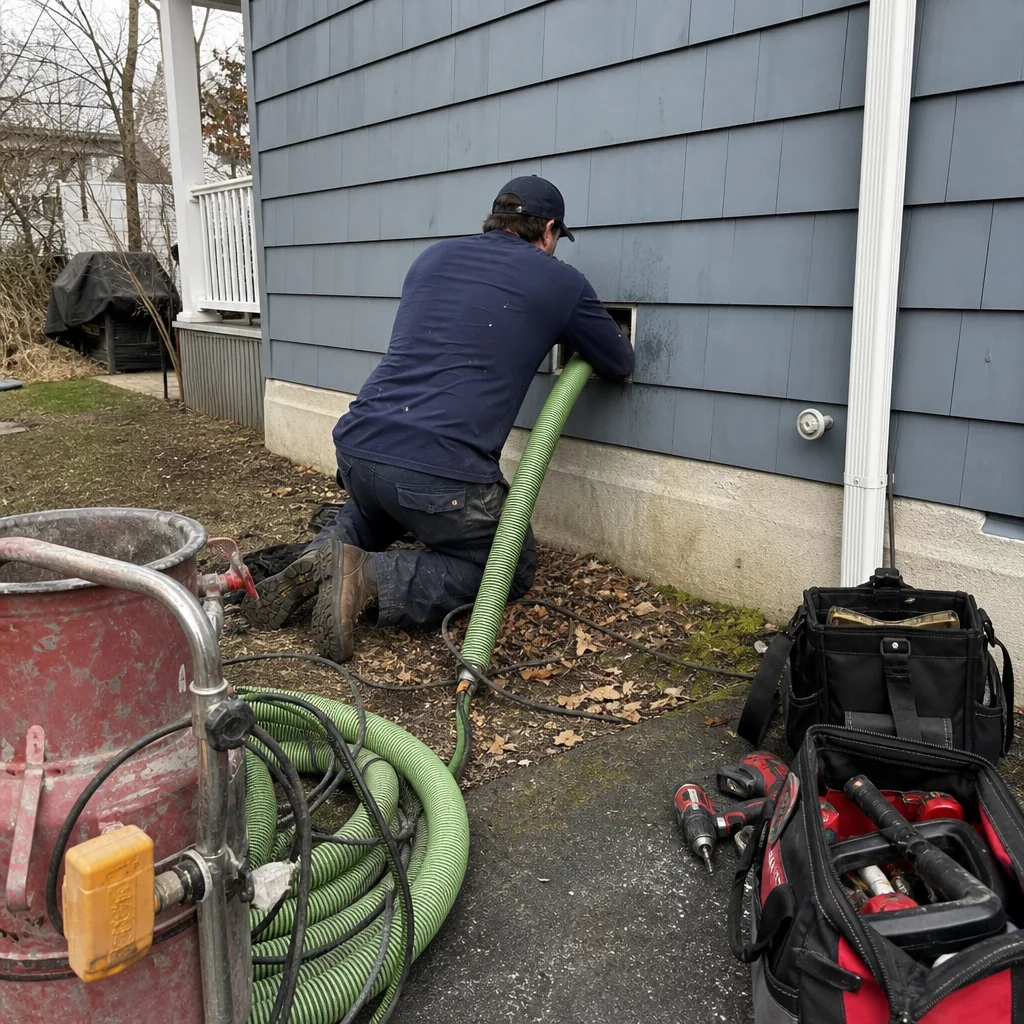 Before
 After
 Before
 After
When to Call a Professional
Call a professional when duct work needs anything beyond surface cleaning, when a technician finds broken duct during a routine cleaning, when your home predates 1980 and the work will disturb original materials, or when a home inspection has flagged mechanical work with unknown permit status. Those are all situations where the scope question comes before the price question. Duct Cleaning New Bedford offers free estimates in New Bedford. Call (844) 793-0706. We answer 24/7. Fast dispatch from 7am to 7pm, Sunday through Friday. Our technicians have up to 15 years of experience with the repair side of duct work as well as the cleaning side.
Frequently Asked Questions
No. Routine air duct cleaning in New Bedford does not require a permit because it’s maintenance rather than mechanical work. Duct repair, replacement, or rerouting may require a permit under 780 CMR, and the answer depends on the scope of the alteration. Call (844) 793-0706 for a free estimate that separates cleaning from any repair work.
Cleaning removes debris from inside an unchanged duct system, while repair changes the system by replacing, reconnecting, or sealing duct work. Under 780 CMR, alterations to mechanical systems typically require permits unless a specific exemption applies. The distinction is whether the physical system stays as it was.
Yes, home inspectors commonly note evidence of recent mechanical work with permit status unknown, and that note becomes part of the buyer’s negotiation. The cost to the seller isn’t fixed, but resolving the question before listing is far cheaper than resolving it during escrow. Call (844) 793-0706 for a free estimate and a documented scope of work you can produce at closing.
They can. Massachusetts regulates asbestos work under the Department of Labor Standards, and any work that cuts or disturbs suspect materials requires a licensed abatement contractor. Routine cleaning that doesn’t disturb the material may proceed, but testing before cutting is the safe standard. Call (844) 793-0706 to discuss the scope before work begins.
Cleaning alone usually doesn’t. Any repair touching a shared mechanical system generally does, and condominium documents add an approval layer on top of the code requirements. The association’s rules define what counts as a limited common element. Call (844) 793-0706 for a free estimate that accounts for the building type.
It should separate cleaning from repair, state whether a permit applies to the repair portion, include before-and-after photos of the actual ducts, and give one flat price per system rather than per-vent pricing. It should also list the contractor’s registration and insurance. Call (844) 793-0706 for a free estimate written that way.
The Bottom Line
The permit question in New Bedford comes down to one distinction: cleaning is maintenance, repair is mechanical work. Cleaning rarely needs a permit. Repair and replacement sometimes do, and the answer lives with the city’s building department rather than in a general rule. Home inspectors flag unpermitted duct modifications at resale, asbestos rules add a separate layer for pre-1980 housing, and multi-family buildings bring their own review requirements. Get the scope in writing, keep cleaning and repair separate, and confirm the permit question before work starts rather than after. That’s the whole discipline, and it protects you at every stage.
For duct cleaning, dryer vent service, or duct repair in New Bedford, call Duct Cleaning New Bedford at (844) 793-0706 for a free estimate. We answer 24/7. Fast dispatch from 7am to 7pm, Sunday through Friday. We use Rotobrush and Nikro systems, carry Abatement Technologies equipment for elevated indoor air quality work, and document every job with before-and-after photos. One flat price per system, agreed before work starts.
Written by the team at Duct Cleaning New Bedford.